
Science with Passion

Application No.: VFD0148 Version 1 10/2016
Determination of mannose and mannooligo-saccharides with an improved RI detector
Yannick Krauke, Hagen Schlicke; applications@knauer.net
KNAUER Wissenschaftliche Geräte GmbH, Hegauer Weg 38, 14163 Berlin
Summary
This application note describes the determination of saccharides with the new AZURA® RID (refractive index detector) 2.1L. A mixture of saccharides was separated on a KNAUER Eurokat Na+ column. The new AZURA RID is approximately three times more sensitive than its predecessor, the Smartline RI detector S2300, which had a limit of quantification (LOQ) between 10 and 20 µg/ml for the tested saccharides.
Introduction
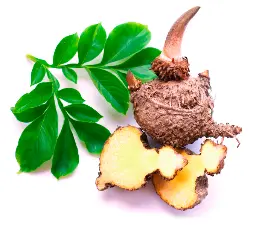
Glucomannans are branched polysaccharides of mannose and glucose. They are found in many plants as energy reserve. The Konjac root (Amorphophallus konjac) contains high amounts of glucomannans. Flour from the Konjac root showed nutritional benefits such as cholesterol lowering. Due to its stimulation of gut-friendly bacteria it is called prebiotic[1]. A prebiotic is a selectively fermented ingredient that allows specific changes, both in the composition and/or activity in the gastrointestinal microflora that confers benefits upon host well-being and health[2]. Prebiotics are a specific class of functional food. Oligosaccharides have the advantage that they survive the entire gastrointestinal transit and thus reach gastrointestinal bacteria[3]. It was shown that glucomannooligosaccharides, obtained by partial hydrolysis of glucomannans, showed a better prebiotic function than pure glucomannan. The prebiotic effect for glucomannooligosaccharides with a degree of polymerization (DP) of 5 was better than for those with a DP of 10[4]. Partial enzymatic hydrolysis is therefore of great interest[5]. Liquid chromatography is one possibility to analyze samples after lysis and to estimate the composition and degree of polymerization. The new AZURA RID 2.1L was tested for its LOQ (limit of quantification). Further the KNAUER Eurokat Na+ column was tested for its ability to separate saccharides with a degree of polymerization higher than 2. A mixture of mannose and mannooligosaccharides was used as a test substrate, since these oligosaccharides
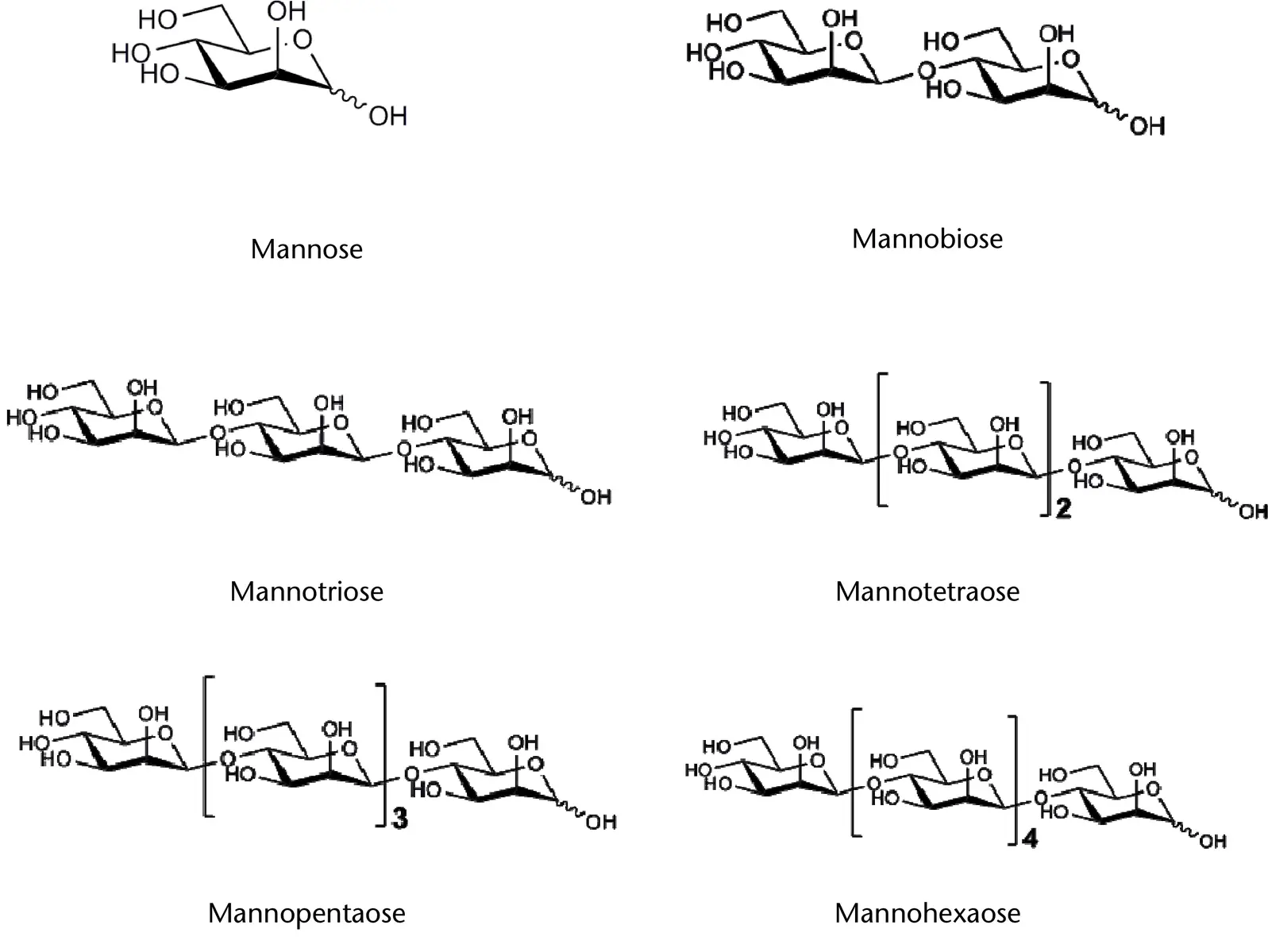
Fig. 1 Chemical structures of the tested saccharides (structures kindly provided by company Megazyme)
Experimental: Sample preparation
Standard solutions of 12 mg/ml of the six saccharides were prepared in H2Odd. A mixture of all six saccharides with a concentration of 2 mg/ml each was prepared and passed through a 45 µm filter. From this standard mixture eight 1:2 dilution steps were prepared for the calibration points. Final concentrations were: 2 mg/ml; 1 mg/ml; 0.5 mg/ml; 0.25 mg/ml; 0.125 mg/ml; 0.0625 mg/ml; 0.03125 mg/ml; 0.015625 mg/ml; 0.0078125 mg/ml.
Saccharides were purchased from company Megazyme
Method parameters
The LOQ of the new KNAUER AZURA RID 2.1L was determined and compared with the KNAUER Smartline S2300 RI detector. A mixture of saccharides was used as test substrate and separated using an analytical KNAUER Eurokat Na+ column. A series of dilutions starting from 2 mg/ml to 0.0078125 mg/ml were prepared. Calibration curves were calculated for each saccharide of the mixture.
Results
The mixture of mannose, mannobiose, mannotriose, mannotetraose, mannopentaose and mannohexaose was separated using the Eurokat Na+ column (Fig. 2). Mannose, mannobiose and mannotriose were baseline separated. Mannotetraose was nearly baseline separated while the peaks for mannopentaose and mannohexaose were not baseline separated (Fig. 2). The chromatogram of this mixture using the Smartline RI detector S2300 showed a similar separation (data not shown).
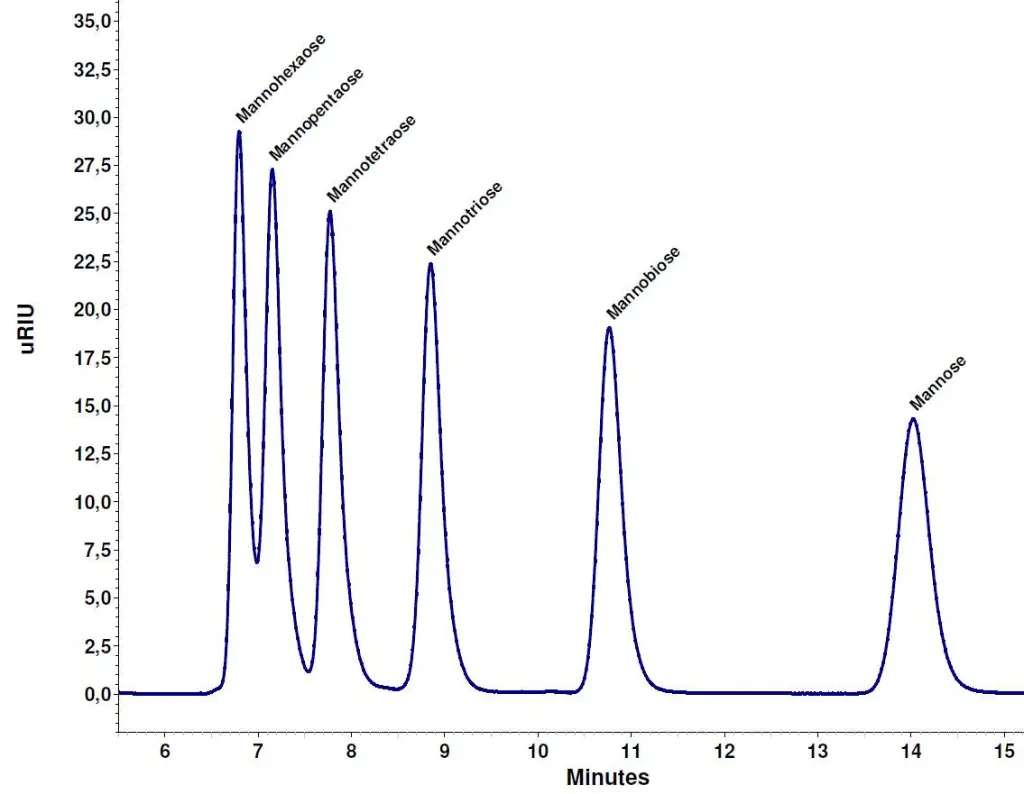
Fig. 2 Separation of the saccharide mixture, each 2 mg/ml,
Eurokat Na+ 300 x 8 mm
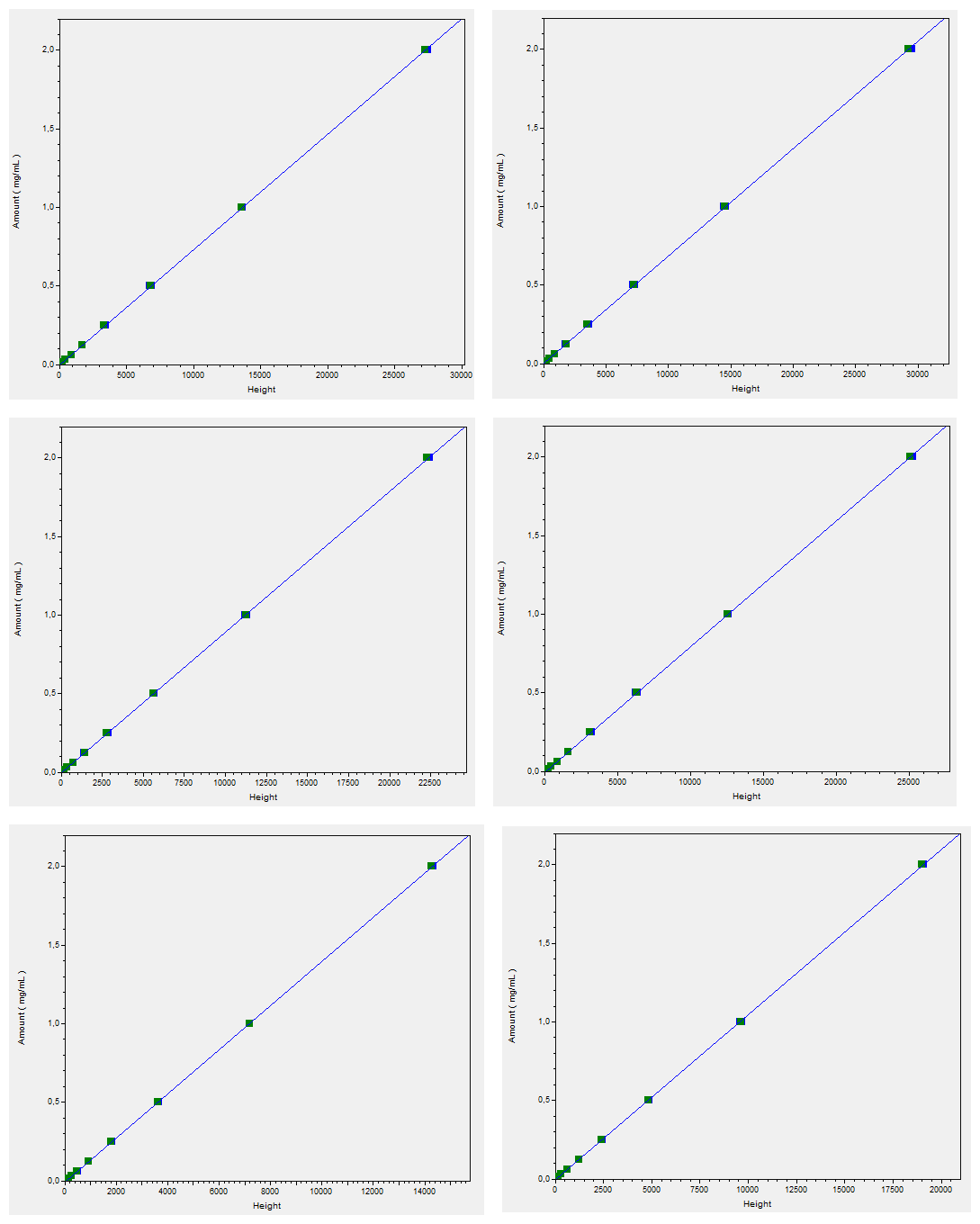
Fig. 3 Calibration graphs for all six tested saccharides with indication of linearity r2
The LOQ for the six tested saccharides was determined and compared using the AZURA RID 2.1L and Smartline RI detector S2300. The noise was determined and the LOQ calculated according to the peak height using the calibration graphs (Fig. 3). The LOQs for all tested saccharides determined with the AZUAR RID 2.1L were significantly lower than those detected with the Smartline RI detector S2300 (Fig. 4). The LOQ range for the Smartline RI detector S2300 was between 65 µg/ml and 35 µg/ml, while the LOQ range for the new AZURA RID 2.1L was between 20 µg/ml and 8 µm/ml. The LOQ of the AZURA RID 2.1L was thus determined to be 20 % to 38 % lower than the LOQ of the Smartline RI detector S2300, which is a significantly higher sensitivity (Fig. 5). The total LOQ values of all measured saccharides are shown in Tab. 1. The relative standard deviation (RSD) values were calculated for the peak height of four replicates at 15.6 µg/ml of each saccharide. The % RSD values calculated for the tested saccharides measured with the RID 2.1L were between 0.52 % and 3.33 % and for the Smartline S2300 between 2.52 % and 7.61 %. These results underline the increased sensitivity of the AZURA RID 2.1L and more accurate measurement at low sample concentration.
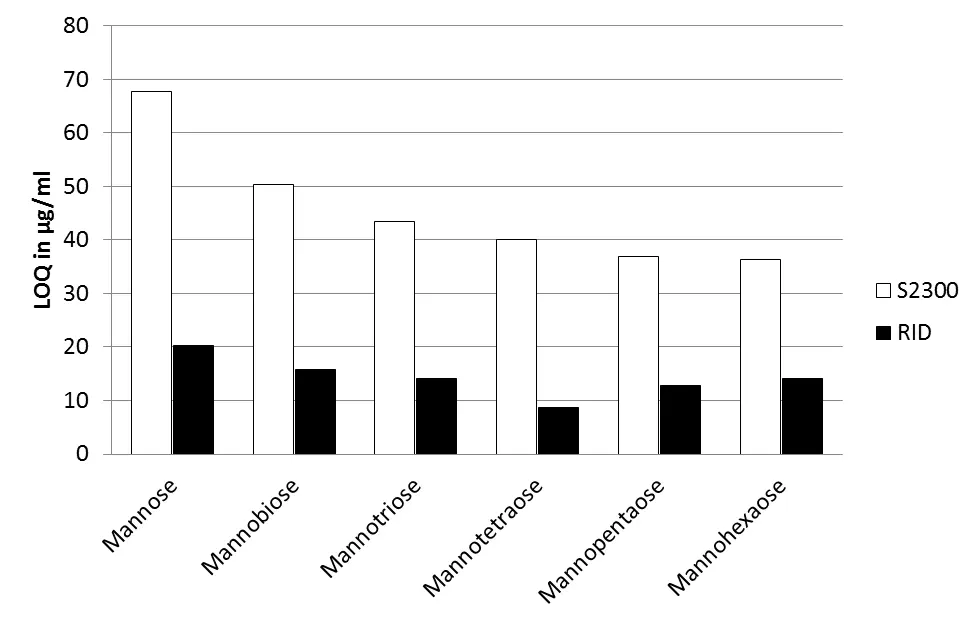
Fig. 4 Comparison of AZURA RID 2.1L (black bars) and Smartline RI detector S2300 (white bars) for their LOQ values for the six tested saccharides
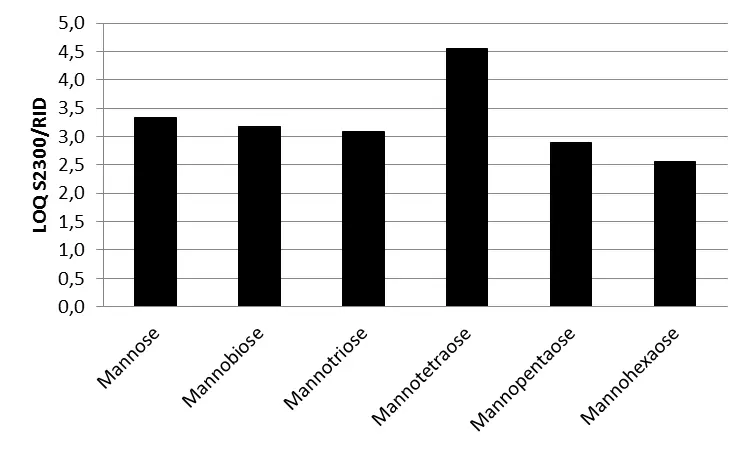
Fig. 5 LOQ ratio of Smartline RI detector S2300 and AZURA RID 2.1L values for all six saccharides
Tab. 1 Comparison of total calculated LOQs and %RSD (peak height) of 1:128 dilution step (15.6µg/ml) of all saccharides measured with AZURA RID 2.1L and Smartline RI S2300
Conclusion
A mixture of six saccharides was separated using a KNAUER Eurokat Na+ column. Mannose, mannobiose, mannotriose and mannotetraose were baseline separated. The new KNAUER AZURA RID 2.1L was used for detection and had an LOQ depending on the saccharide between 10 and 20 µg/ml. In comparison with the Smartline RI detector S2300 the AZURA RID 2.1L is up to 4.5 times more sensitive. The AZURA RID 2.1L in combination with the Eurokat Na+ column is an excellent tool for the separation and identification of oligosaccharides with a degree of polymerization of 2 to 5. Concentrations can be analyzed for certain saccharides down to 10 µg/ml. Eurokat Na+ is applicable for the separation of sugar oligomers.
Physical properties of recommended column
Recommended instrumentation
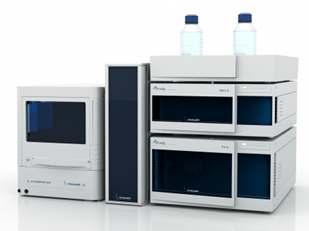
The analysis of saccharides requires an isocratic HPLC system equipped with degasser, autosampler, column oven and a refractive index detector. Other configurations are also available. Please contact KNAUER to configure a system that fits your needs.
References
[1] Al-Ghazzewi F. H., Khanna S., Tester R.F., Piggot j. The potential use of hydrolysed konjac glucomannan as a prebiotic. J Sci Food Agric 87:1758-1766 (2007)
[2] Roberfroid MB. Prebiotics: The Concept Revisited. J Nutr. 137 (3 Suppl 2): 830S–7S. PMID 17311983 (March 2007)
[3] Albrecht S., et al Enzymatic production and characterization of Konjac glucomannan oligosaccharides J. Agric. Food Chem. 59: 12658-12666 (2011)
[4] Chen J., Liu D., Shi B., Wang H., Cheng Y., Zhang W. Optimization of hydrolysis conditions for the production of glucomanno-oligosaccharides from konjac using β-mannase by response surface methodology Carbohydrate Polymers 93: 81-88 (2013)
[5] van Zyl W. H. Rose S. H., Trollope K., Görgens J. F. Fungal β-mannanases: Mannan hydrolysis, heterologous production and biotechnological applications Process Biochemistry 45: 1203-1213 (2010)
This project has received funding from the European Union's Seventh Framework Program for research, technological development and demonstration under grant agreement no FP7-KBBE-2013-7-613802;

Application details