Overview of HPLC Detection Techniques – Performance Criteria of LC Detectors
In the last blog, we provided a brief overview of the various types of HPLC detectors. Today we’ll take a closer look at performance parameters of LC detectors and discuss criteria and specifications that need to be considered to evaluate their suitability for specific chromatographic separations. Additionally, we’ll also provide a broad comparison of different detectors and give a few indications on how to select the right detection technology.
What Makes an Ideal HPLC Detector?
With so many HPLC detectors out there, you might ask: Why isn’t there just one detector that works for everything? The short answer is that no single detector can meet all analytical needs at once. Still, most detectors are designed with a shared set of ideal properties in mind.
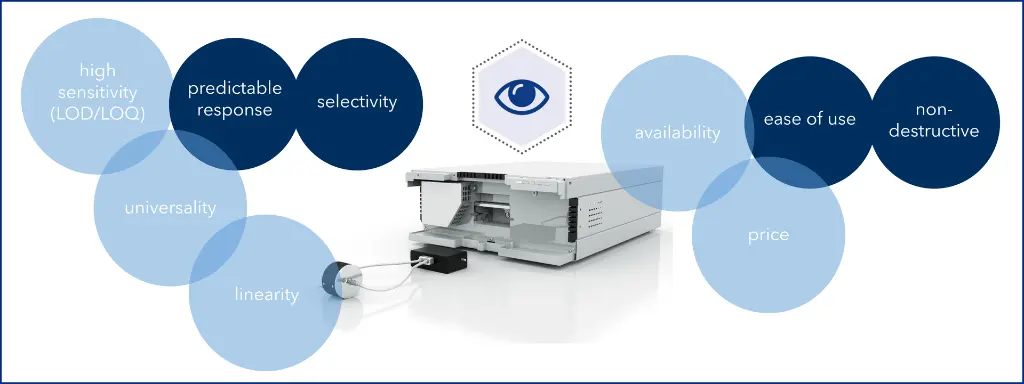
Figure 1: Detector requirements. (Graphic by KNAUER)
1. High Sensitivity – Seeing the Smallest Signals
An ideal detector should be able to “see” very small quantities of a compound (ng or pg range). High sensitivity improves limits of detection (LOD), reduces sample preparation needs, and supports applications such as impurity profiling or pharmacokinetics. Some detectors such as fluorescence (FLD), electrochemical detection (ECD), and mass spectrometry (MS) are extremely sensitive, but often only for certain types of molecules.
2. Good Selectivity or Broad Applicability – Knowing What You See
Selectivity determines how well a detector responds to the analyte without interference from the matrix or mobile phase. Depending on the application, a detector should either be selective, responding only to compounds with specific properties (such as fluorescence or electrochemical activity), or more universal, detecting a broad range of compounds regardless of their structure.
3. Linear Response
and Wide Dynamic Range – Trusting the Numbers
A detector should show a linear response over a broad concentration range, allowing accurate quantification of both major components and trace-level impurities in the same run. This makes calibration easier and results more trustworthy. Also, the response of the detector should be highly reproducible from run to run.
4. Compatibility with HPLC Conditions – Working Seamlessly with the Method
An ideal detector should work well with gradient and isocratic elution, common mobile phases and additives, as well as typical HPLC flow rates and temperatures. Poor compatibility can limit method flexibility or require compromises in separation performance. Some detectors perform excellently but only under specific conditions, which can limit method flexibility.
5. Stability and Low Noise – Seeing the Signal Clearly
A stable baseline with low noise and minimal drift improves signal-to-noise ratios and data quality. This is particularly important for long runs, gradient methods, and trace-level analysis.
6. Robustness, Ease of Use and Maintenance – Supporting Daily Lab Work
An ideal detector should be robust and reliable over long sequences, as well as easy to set up and operate with minimal maintenance needs. When it comes to routine lab work, robustness and ease of operation are usually just as important as performance. Low maintenance requirements and straightforward troubleshooting are major advantages in high-throughput labs. From a practical and budget perspective, an ideal detector should also be low in maintenance and consumable costs.
The reality is: You can't have everything
Because no detector fulfils all these criteria perfectly, detector choice is always a compromise of balancing sensitivity, selectivity, universality, robustness, and cost. That’s why multi-detector setups (e.g., UV + CAD, or UV + MS) are increasingly common in modern HPLC systems, combining complementary strengths.
Table 1: Overview of Common Detector Classes in HPLC: Side-by-side Comparison. (Graphic by KNAUER)
Critical Detector Performance Parameters
Data Sampling Rate
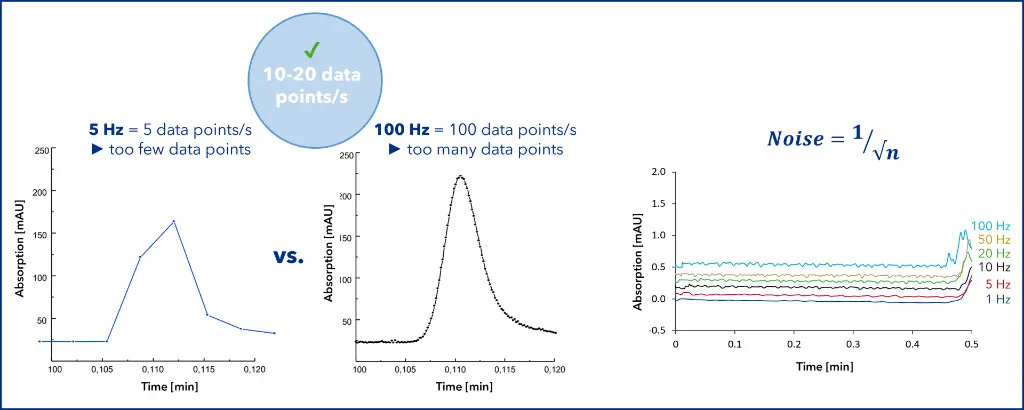
Figure 2: Example for too less and too high data sampling rate. (Graphic by KNAUER)
The data acquisition rate or sampling rate is probably one of the most, if not the most, important detector parameter to set. It is defined as the number of data points taken over one second and affects the peak shape, how well the peak can be reproduced, the area precision, and the baseline noise.
The greater the number, the more data points are taken. The detector will take the data points it gets over a set period of time and average them. These average data points are used to build the chromatogram.
At a data rate of 5 Hz, we collect 5 data points every second. However, if there are not enough data points, you'll end up with jagged, unsmooth and unreliable results (see figure 2, left). If the value is set to 100 Hz, we’ll collect 100 data points a second, which is usually too many data points (figure 2, middle). The most suitable sampling rate depends on the peak width. For most HPLC applications, a sampling rate of at least 10 Hz up to 20 Hz will give a smooth, symmetric Gaussian peak shape.
Another thing that happens because of high data acquisition rates, is a more noisy baseline, since statistically, the noise of a system is defined by dividing 1 by the square root of the number of data points n.
Noise & Drift
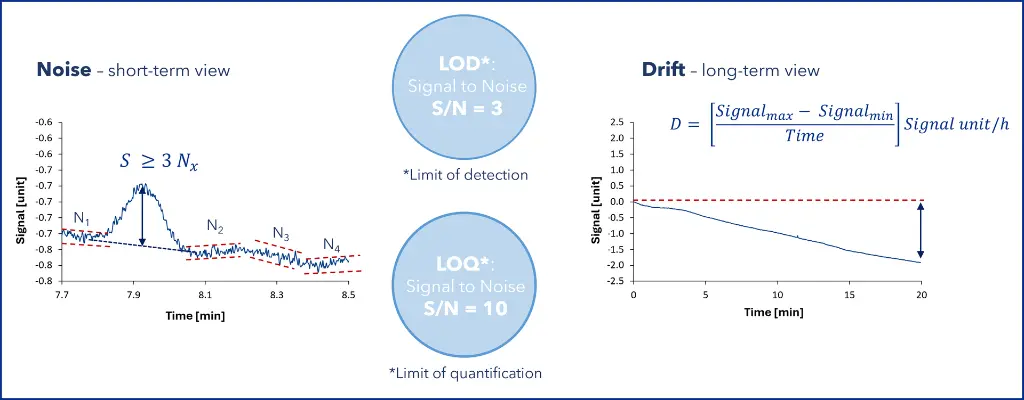
Figure 3: Baseline noise and drift. (Graphic by KNAUER)
But what exactly is the baseline noise? Basically, it’s the amplitude of the detector baseline, expressed in appropriate detector units, which includes all variation over a certain time window. The baseline noise is normally calculated from peak to peak of a detector baseline measured with the used mobile phase.
Every HPLC detector has some noise, originating from electronic noise, detector cell noise, detector instability, temperature fluctuations, and other influences. The noise level significantly limits how sensitive the detector is, as noise directly affects the signal-to-noise ratio (S/N).
A component peak can be reliably identified if the peak height is at least three times higher than the calculated noise. This parameter is called Limit of detection (LOD). The quantification limit (LOQ) of a component has to be higher and is defined as ten times the calculated noise.
Another important detector parameter that affects sensitivity is the drift of the detector baseline. Basically, how a detector drifts over time is a good indicator of its long-term stability. It is useful to check short-term noise from peak to peak and long-term baseline drift over a certain time window. Drift is the average slope/change of the baseline in the corresponding unit of time.
Strong variations in the baseline drift can also influence the sensitivity and complicate peak integration. Short term baseline noise is influenced by detector contaminations and detector deteriorating. Long term baseline drift is associated with detector temperature stability and equilibration processes.
How to Choose the Right Detector
There's no one "best" HPLC detector, there is only the right tool for the job. When making your choice, think about factors like:
1. Does my analyte absorb UV or fluoresce?
If so, optical detectors like UV/VIS and FLD are the simplest and most effective solutions.
2. Does my analyte lack chromophores?
If that's the case, then RID, ELSD, or CAD may be the best options.
3. Do I need info about the structure?
If yes, MS is definitely the strongest choice.
4. Do I require extremely high sensitivity?
For this, electrochemical detection or MS is the way to go.
5. Am I studying macromolecules like polymers or proteins?
Here, MALS and viscometry deliver absolute molecular weight, size, and branching information, independent of column elution behavior.
For a deeper insight into choosing the right detector, refer to our blog “The way you look at it - A comprehensive guide for selecting the appropriate HPLC detector”. Make your selection based on these factors to ensure optimal results in your HPLC analysis.
Final Thoughts
Understanding the ideal properties of an HPLC detector helps explain why certain detectors excel in specific applications and why trade-offs are unavoidable, giving you a useful framework for selecting the right tool.
In the following blog posts of this series, we’ll deep dive into each major HPLC detection technique, starting with the most widely used optical method: UV/VIS Detection.
For further information on this topic, please contact our author: huhmann@knauer.net
Resources
L. R. Snyder, J. J. Kirkland, J. W. Dolan, Introduction to Modern Liquid Chromatography, 3rd Edition, John Wiley & Sons, Inc., Hoboken, New Jersey, 2010.
D. A. Skoog, F. J. Holler, S. R. Crouch, Principles of Instrumental Analysis, 7th Edition, Cengage Learning, Boston, 2018.
R. P. W. Scott, Liquid Chromatography Detectors. In J. Chromatogr. Library, Vol. 11, Elsevier Scientific Publishing Company, Amsterdam, 1977, pp. iii-ix, 1-248.
V. R. Meyer, Praxis der Hochleistungs-Flüssigchromatographie, 10., vollst. überarb. u. erw. Auflage, Wiley-VCH, Weinheim, 2009.
G. Aced, H. J. Möckel, Liquidchromatographie, Apparative, theoretische und methodische Grundlagen der HPLC, VCH Verlagsgesellschaft mbH, Weinheim, 1991.