Seeing the Glow: A Practical Dive into Fluorescence Detection in HPLC
When it comes to High-Performance Liquid Chromatography (HPLC), detection is where the chemistry truly comes to life. Among the many detection techniques available, fluorescence detection feels like a bit of a hidden gem, highly sensitive, impressively selective and capable of detecting analytes at trace levels. Fluorescence detectors (FLDs) “see” molecules by capturing the light they emit, making peaks effectively “glow” with analytical precision.
In this blog post, we’ll explore what makes FLDs such a powerful tool by walking through the principles behind fluorescence detection, how FLDs work, when to use them, and how to get the most out of them – whether you're just starting out or looking to refine your analytical toolkit.
💡Why Fluorescence?
Imagine trying to spot someone wearing neon clothing under a blacklight – they stand out instantly against the dark background. That’s essentially how fluorescence detection works in HPLC.
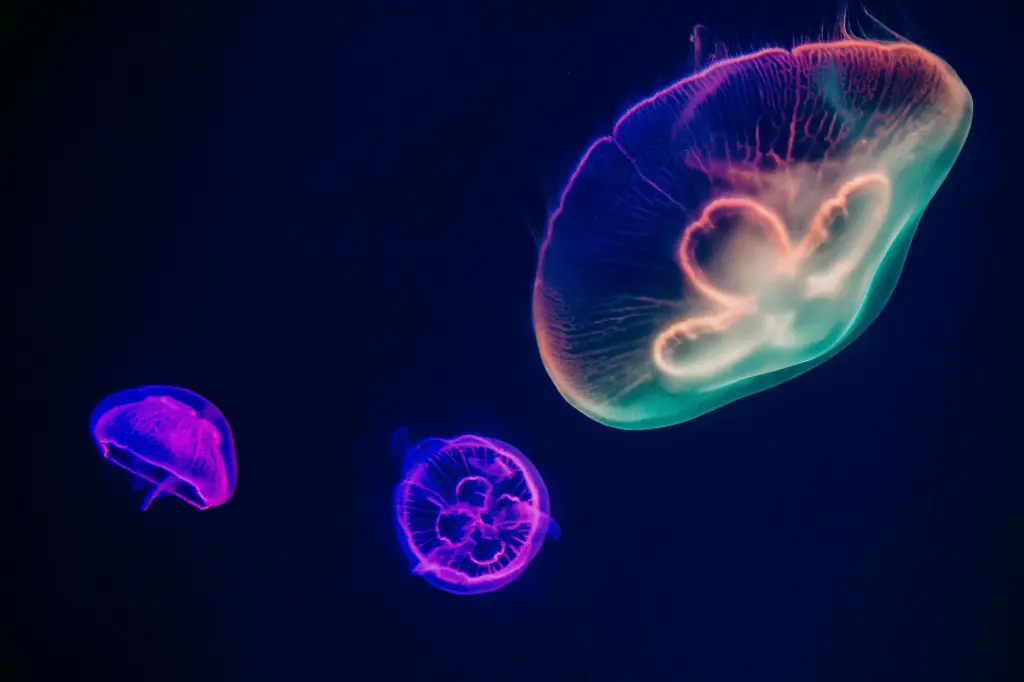
Figure 1: Fluorescent jellyfish in a dark aquatic environment. Photo from pexels.com
While UV or diode-array detectors measure how much light a sample absorbs, FLDs measure the light a compound emits after being excited at a specific wavelength. In other words, instead of passively observing a decrease in light, a FLD detects molecules that generate their own signal. The result? Exceptional sensitivity, cleaner baselines, and far greater selectivity, especially in complex mixtures.
This “glow effect” is what makes fluorescence detection so powerful. Compounds that naturally fluoresce or that have been derivatized with a fluorophore can be detected at extremely low concentrations, often down to picogram levels. In practice, FLDs can be 10 to 1,000 times more sensitive than UV detectors, making them a go-to technique for trace-level analysis in pharmaceuticals, food safety, environmental testing, and biological samples.
Of course, this sensitivity comes with a trade-off: fluorescence detection only works for compounds that fluoresce. That’s why it’s less universally applicable than UV/VIS detection.
So, what’s happening behind the scenes? Let’s dive into the details and take a deeper look at the detection principle.
💡The Science Behind the Glow: What Is Fluorescence?
In simple terms, fluorescence is a photophysical phenomenon. When light of a specific wavelength strikes an organic molecule having specific functional groups, known as fluorophores, it absorbs energy and its electrons get temporarily raised to several excited states. After losing certain absorbed energy in vibrational relaxation, the electrons return to the ground state while emitting light (see Figure 2). This energy emission is called fluorescence.
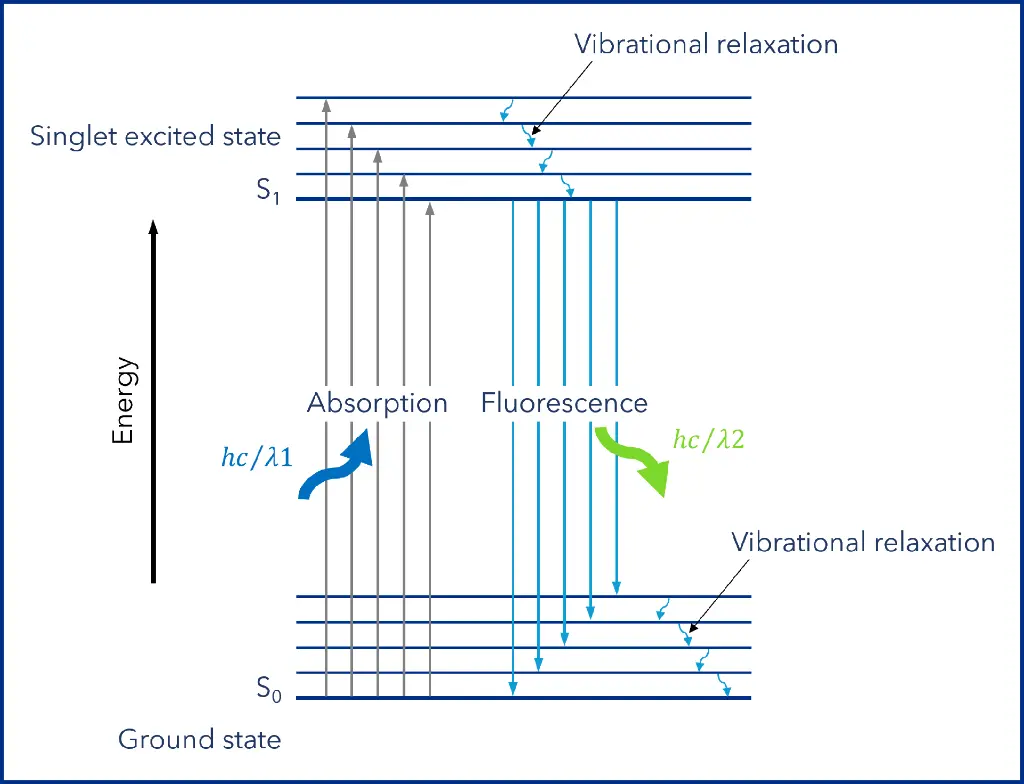
Figure 2: Jablonski diagram. (1) Excitation: The molecule absorbs light at a specific wavelength, promoting its electrons to a higher energy (excited) state. (2) Relaxation: The molecule quickly loses a small amount of energy through vibrational relaxation. (3) Emission: As the electrons return to their ground state, the molecule emits light at a longer wavelength (lower energy). (Graphic by KNAUER)
For example, a compound excited with ultraviolet light at 280 nm might emit visible light at around 340 nm. The emitted fluorescent light is generally shifted to a longer wavelength compared to the excitation light. This key effect is known the Stokes shift (see Figure 3).
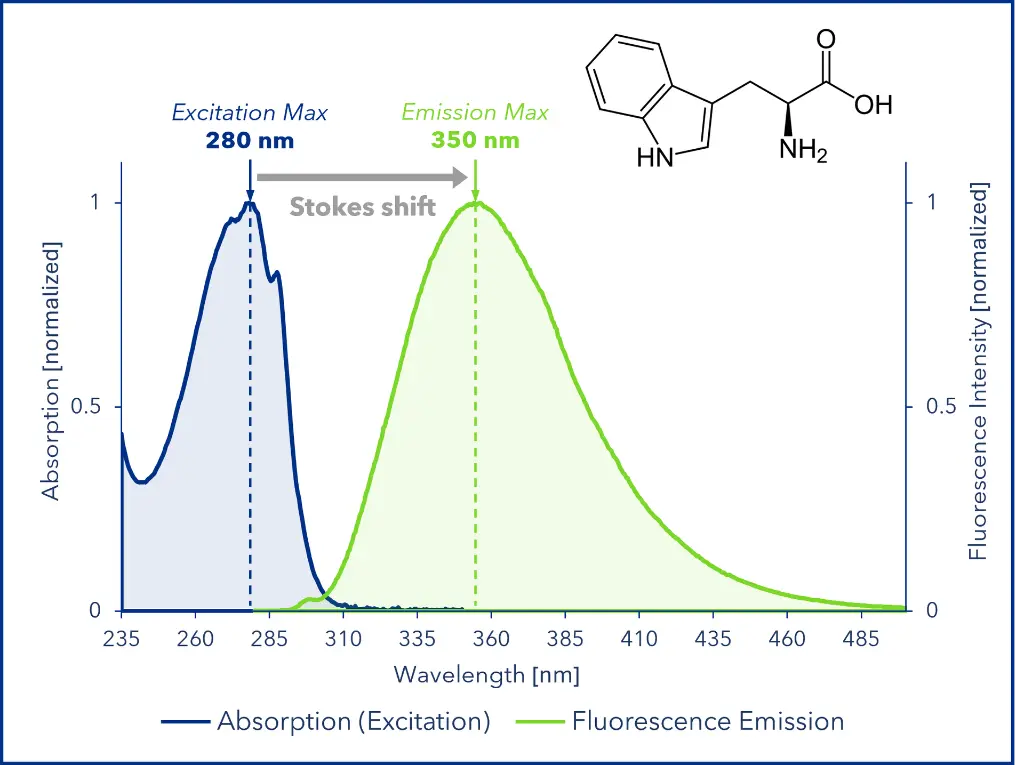
Figure 3: Absorption and emission spectra of tryptophan. (Graphic by KNAUER)
💡Which Compounds Are Naturally Fluorescent?
Not all compounds fluoresce, and not all do so equally. Fortunately, many analytically relevant molecules do naturally emit light. Fluorescence is especially common in compounds with aromatic ring structures and extended conjugation systems. Some classic examples include:
- Fluorescent dyes or markers like fluorescein and rhodamine
- Aromatic amino acids such as tryptophan, tyrosine, and phenylalanine
- Polycyclic aromatic hydrocarbons (PAHs) like naphthalene or anthracene
- Certain vitamins, including riboflavin and vitamin A derivatives
With this, no extra chemistry is required. If your analyte already fluoresces, you can take full advantage of FLDs right away. But what if your compound doesn’t fluoresce? That’s not the end of the story.
💡Derivatization: Expanding the Possibilities
Not all analytes are naturally fluorescent, but that doesn’t mean they’re out of reach for fluorescence detection in HPLC. This is where derivatization steps in: a clever chemical workaround that “tags” non-fluorescent molecules with a fluorescent label, effectively giving them a “glow”.
Reagents like dansyl chloride, fluorescamine, OPA, or FMOC are commonly used to modify compounds such as amino acids, peptides, carbohydrates, vitamins, or certain pharmaceuticals so they can be detected by fluorescence (see Figure 4).
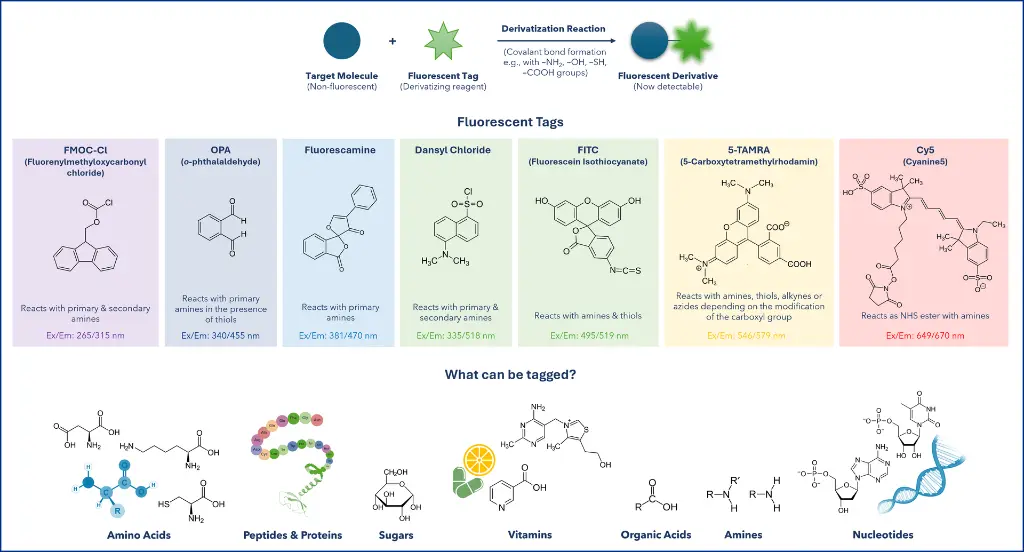
Figure 4: Fluorescent tags for derivatization for HPLC fluorescence detection. (Graphic by KNAUER)
In practice, derivatization can be done in two ways:
- Pre-column derivatization (before separation): the analyte is labeled prior to injection. This approach is simple, flexible and can be highly sensitive, but reaction efficiency can be influenced by the sample matrix and it requires extra sample-handling steps.
- Post-column derivatization (after separation): the analytes are first separated, then tagged with the fluorescent reagent on the way to the detector. This reduces matrix effects and improves robustness, but often requires more reagent and system complexity, as well as very fast reaction chemistry.
Ideally, a derivatization reaction is fast, efficient, and works at room temperature with near-complete conversion. Of course, it also adds extra steps and complexity to your workflow, so it’s always a balance between sensitivity, simplicity, and practicality.
💡Anatomy of an HPLC Fluorescence Detector
An FLD looks quite similar to a single or fixed UV-VIS detector, but it works a bit differently (see Figure 5). A xenon flash lamp or continuous xenon lamp is typically used as the light source, providing strong output in the UV range where many fluorescent compounds are excited. The optical system then uses two monochromators or diffraction gratings: one to choose the excitation wavelength (the energy used to excite the molecule) and another to isolate the emission wavelength (the fluorescence light given off as the molecule relaxes back to its ground state).
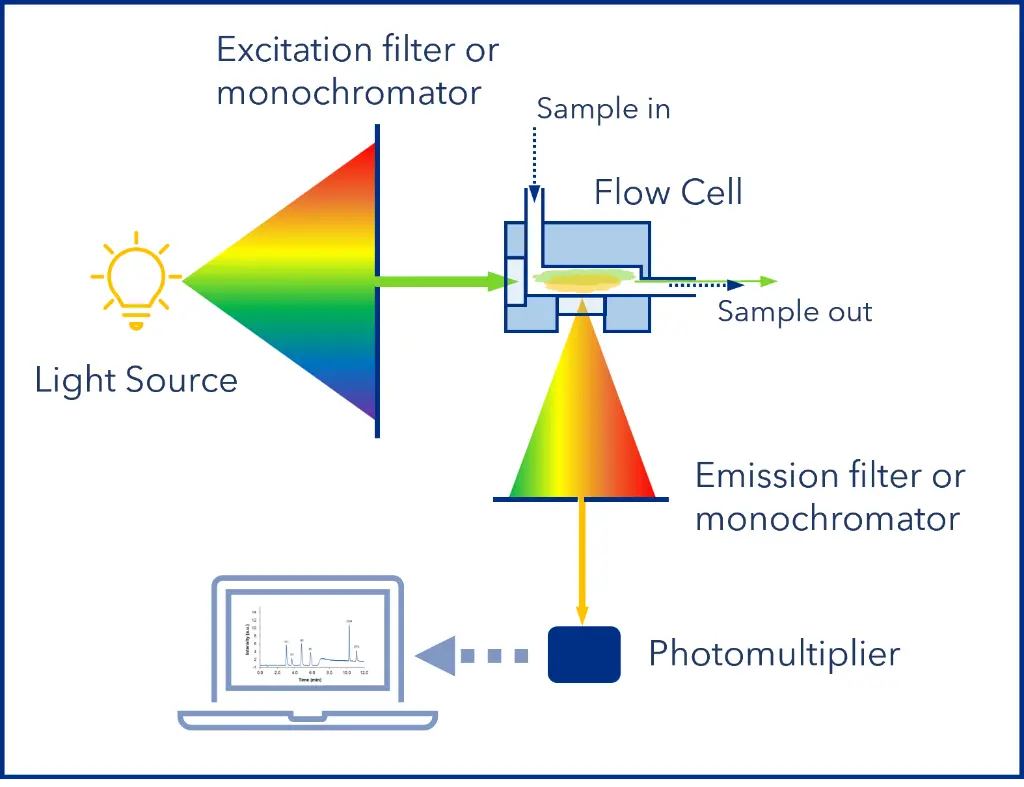
Figure 5: Schematic of a fluorescence detector. (Graphic by KNAUER)
Inside the flow cell, separated analytes are excited by light and, if they are fluorescent, emit light at a longer wavelength. While a UV/VIS detector detects light that has passed through the flow cell, in an FLD, the emitted light is collected at a 90° angle to the excitation beam, reducing background interference from the excitation light and scattered radiation and improving signal clarity. A highly sensitive photomultiplier tube (PMT) converts the emitted light into an electrical signal for data acquisition.
💡Why Choose Fluorescence Detection in HPLC?
🔬 Advantages of Fluorescence Detection
Fluorescence detection stands out for a few key reasons. Essentially, the principle behind fluorescence already explains its biggest strengths.
High Selectivity & Exceptional Sensitivity
By selecting both an excitation and an emission wavelength, you essentially decide which molecules are visible, and which are ignored. Only compounds that fluoresce at these specified wavelengths are detected, which leads to nearly no coelution, minimal interference from the sample matrix, and thus low background noise. That’s why FLD delivers such remarkable selectivity (see Figure 6).
With this, it also comes that FLD shows such clean, clear and very strong signals, resulting in exceptional sensitivity reaching ng to pg levels for your compound of interest. This is 100-1,000 times lower detection limits than typical UV detection can achieve.
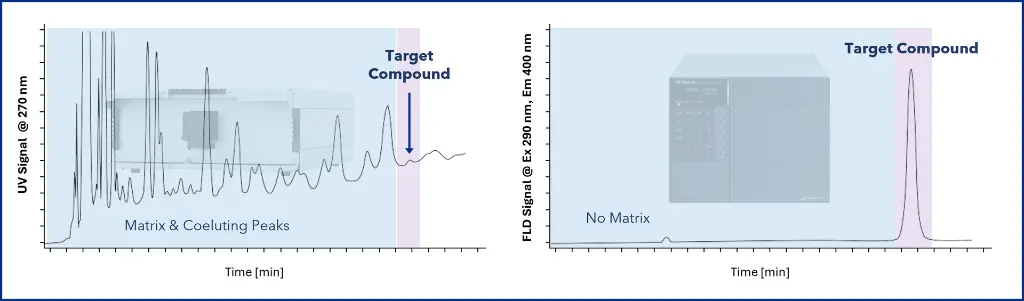
Figure 6: UV vs FL detection. With UVD (left), the target compound gives only a low-intensity peak, showing interference from the matrix and co-eluting peaks. FLD (right) provides a highly selective and sensitive peak for the target compound while eliminating matrix peaks. (Graphic by KNAUER)
Furthermore, FL detection is compatible with isocratic and gradient methods, and shows a dynamic range of typically 3-4 orders of magnitude, giving quantitative accuracy.
⚖️ Limitations of Fluorescence Detection
Like any technique, fluorescence detection has its trade-offs as well.
The selectivity comes with a catch: not all compounds fluoresce, making FLD less universal than UVD. Derivatization may be required, adding extra steps and potential variability to the workflow. Method development can also be more involved, as optimal excitation and emission wavelengths must be carefully chosen.
Additionally, fluorescence signals and thus sensitivity can be affected by quenching effects (e.g., from solvents, pH, or ions). Fluorescence quenching can also occur from the analyte itself. At high concentrations, the emitted light intensity plateaus or even decreases as molecular collisions hinder emission. That’s why the technique is not perfectly linear across all concentrations and shows a narrower linear range compared to UV detection. Temperature also influences the fluorescence signal intensity. It decreases with higher temperature due to stronger inter- and intramolecular collision activities.
The construction of the flow cell is not as robust as that for a UV detector, the typical pressure limits for a standard cell are 20 bar.
💡Practical Tips for Getting the Best Results with Fluorescence Detection
Fluorescence detection is powerful, but a bit picky. Small changes can make a big difference. A few practical tips to keep your signal clear and strong.
🎯 Wavelength Tuning
Choosing the right excitation and emission settings is key to maximizing signal and minimizing noise. Literature values are a good starting point, but wavelength scans can help fine-tune conditions, especially during method development and when maximum excitation and emission wavelengths of the sample are not yet known.
Multi-wavelength scanning or time-programmed detection allows for setting different wavelength pairs during one run and optimize detection of different fluorescent compounds simultaneously.
🫧 Mind the Mobile Phase
Some solvents quench fluorescence (e.g., methanol), others (like acetonitrile) are generally fluorescence-friendly. Impurities or additives can also contribute to background signal. So always use solvents of the highest purity. Also, degas your mobile phase permanently using an in-line vacuum degasser, as dissolved oxygen can quench fluorescence. Initially, vacuum filter and sonicate your aqueous/organic mobile phase to remove the bulk of the air.
📉 Watch for Quenching Effects
Certain conditions (e.g., high concentrations, pH changes, higher temperatures) or certain solvents can reduce fluorescence signal intensity. If possible, use a detector that allows for temperature control of the flow cell.
🧽 Keep It Clean
Not just your analyte, but even trace contaminants can fluoresce. Clean glassware and high-purity reagents are essential.
⚙️ Optimize Slit Widths & Optics
Wider slits increase signal but can also introduce noise. Ensure the detector optics are well aligned (e.g. lamp position) and clean to avoid stray light. Check lamp condition frequently; an aging lamp can reduce excitation efficiency.
🧪 Derivatization Considerations
Ensure reproducible reaction conditions and verify derivatization efficiency for accurate quantification.
💡When to Use Fluorescence Detection: Real-World Applications
Fluorescence detection really comes into its own when you need both high sensitivity and selectivity. Its ability to “see only what glows” makes it invaluable, especially in complex samples or at very low concentrations (trace analysis).
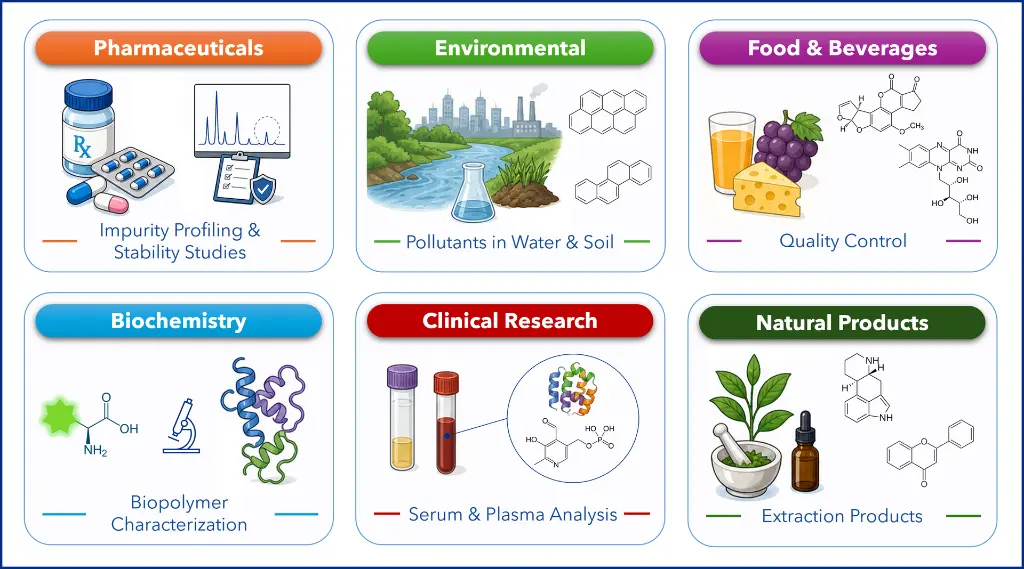
Figure 7: Common applications of fluorescence detection in HPLC. (Graphic by KNAUER. Icons generated by DALL-E 3, OpenAI, GPT-5.4; May 4th, 2026)
You’ll find it widely used across different fields:
Pharmaceuticals Analysis, e.g. detecting trace impurities, metabolites, or low-dose active compounds for impurity profiling and stability studies.
Environmental Analysis, e.g. monitoring pollutants like polycyclic aromatic hydrocarbons (PAHs) or pesticides in water and soil. An example application from our lab is the online SPE-HPLC analysis of PAHs in water with FLD.
Food & Beverage Analysis, e.g. analyzing vitamins, antioxidants, or contaminants such as aflatoxins. For example, we determined aflatoxins in diverse food matrices, including cereal-based baby food products, dried fruit samples, pistachios, peanuts, as well as cannabis products. FLD can also be used in GPC-LC to identify and quantify PAHs in olive oils.
Biochemistry & Clinical Research, e.g. quantifying amino acids, proteins, or biomarkers (often after derivatization), as well as serum and plasma analysis. At KNAUER we analyzed fluorescence labeled proteins with FLD for semi-preparative FPLC.
Natural Product Analysis, e.g. determination of alkaloids or flavonoids in plant extracts.
FLD can also be perfectly used in series, for example, first UV for broader profiling, then fluorescence for confirmation or enhanced detection limits.
💡Wrapping Up: When Your Analysis Starts to Glow
Fluorescence detection in HPLC offers a powerful combination of sensitivity and selectivity, making it an excellent choice for trace analysis and complex matrices. It may not be as universal as UV detection, but when your analyte naturally fluoresces or can be derivatized, it becomes incredibly effective and it’s hard to beat its clarity and precision.
Yes, it can require a bit more care during method development, but the payoff is clear: cleaner chromatograms, lower detection limits, and higher confidence in your results.
So if your peaks seem too faint, it might be worth asking: could this analysis shine a little brighter with fluorescence?
Explore KNAUER’s FLD solutions here or contact our Sales team for support in choosing the right detector for your application.
In this blog series, we’ll continue exploring other HPLC detection techniques, from conductivity detection to mass spectrometry, helping you choose the right tool for your analytical challenges. Stay tuned, and keep your signals strong and your baselines steady.
For further information on this topic, please contact our author: huhmann@knauer.net
Resources
M. W. Dong, HPLC and UHPLC for Practicing Scientists, 2nd Edition, John Wiley & Sons, Inc., Hoboken, New Jersey, 2019.
D. A. Skoog, F. J. Holler, S. R. Crouch, Principles of Instrumental Analysis, 7th Edition, Cengage Learning, Boston, 2018.
L. R. Snyder, J. J. Kirkland, J. W. Dolan, Introduction to Modern Liquid Chromatography, 3rd Edition, John Wiley & Sons, Inc., Hoboken, New Jersey, 2010.
Shimadzu Corporation, Basics of Liquid Chromatography, Fluorescence Detection, https://www.shimadzu.com/an/service-support/technical-support/analysis-basics/basic/fluorescence_detection.html (last accessed: 2026-04-13, 12:25)
J. W. Dolan, How Does It Work? Part V:
Fluorescence Detectors, LCGC North Amer., 2016, 34(5), 324-329.
R. P. W. Scott, Liquid Chromatography Detectors. In J. Chromatogr. Library, Vol. 11, Elsevier Scientific Publishing Company, Amsterdam, 1977, pp. iii-ix, 1-248.
V. R. Meyer, Praxis der Hochleistungs-Flüssigchromatographie, 10., vollst. überarb. u. erw. Auflage, Wiley-VCH, Weinheim, 2009.
G. Aced, H. J. Möckel, Liquidchromatographie, Apparative, theoretische und methodische Grundlagen der HPLC, VCH Verlagsgesellschaft mbH, Weinheim, 1991.