How XNApharma develops custom RNA formulations using the NanoScaler Pro
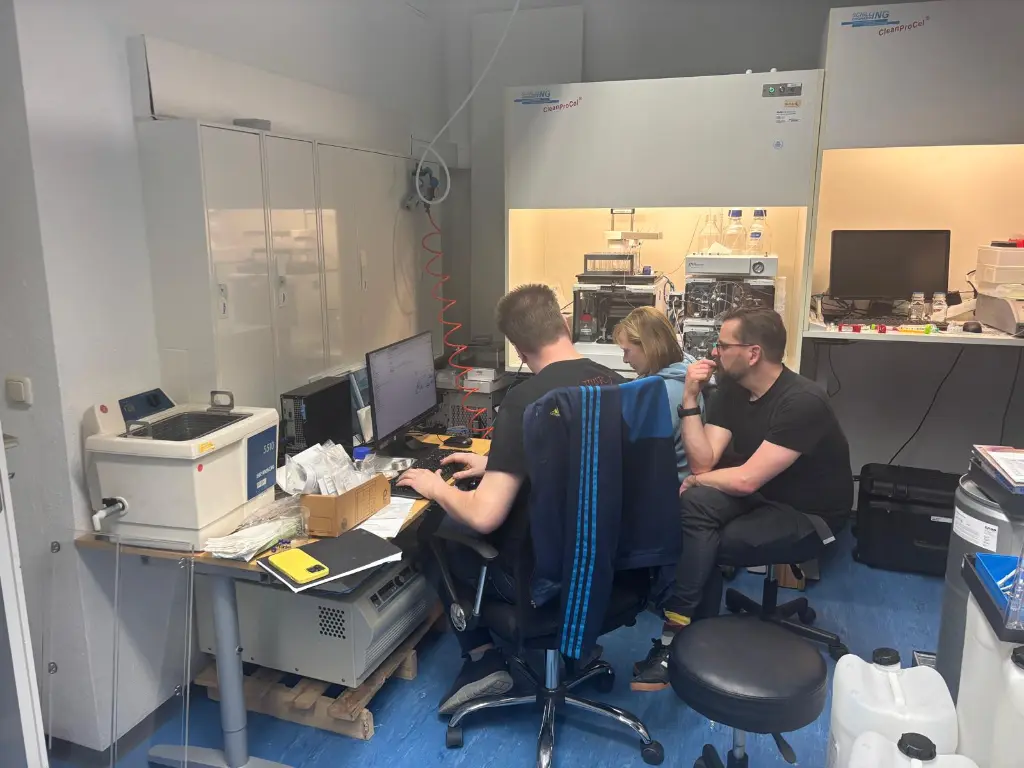
When the KNAUER team visited XNApharma in Gera in early March, the focus wasn’t just on theory, but on something much more exciting: developing functional lipid nanoparticles (LNPs) right there in their own lab.
Goal of the workshop was not only to familiarize ourselves with the NanoScaler Pro, but also to put it to use directly in our own projects, specifically for the formulation of mRNA- and siRNA-based LNPs.
The background: Understanding LNPs and making them by yourself
The NanoScaler Pro is an automated system for the reproducible production and screening of LNPs. The principle behind it is as elegant as it is effective:
- Lipids are dissolved in an organic solvent (e.g., ethanol)
- The RNA is dissolved in an aqueous phase
- The two streams converge in what is known as the Impingement Jet Mixer (IJM)
- This process creates nanoparticles within milliseconds
The result: controllable particle sizes, reproducible conditions, and minimal API losses
What is particularly important to us is the ability to specifically adjust parameters such as the flow rate and thereby directly influence the properties of the LNPs.
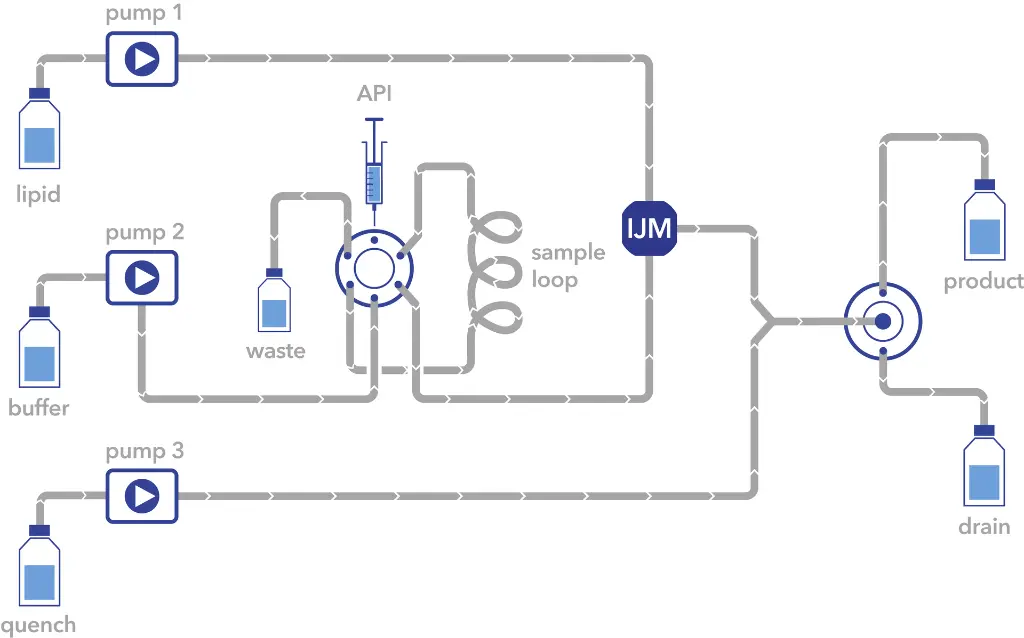
Fig. 1 NanoScaler flowchart (R&D mode) Graphic by ©KNAUER
Experiment 1: mRNA Transfection – Proof of Concept
To test the system, we formulated LNPs with green fluorescent protein (GFP) mRNA.
The idea: If the transfection is successful, the cells will glow green.
What we varied
- Three different total flow rates (TFR): 7.5 / 10.0 / 12.5 mL/min
-
Constant flow ratio (FRR = 1:3)
What we observed
- After 24 h:
– No visible GFP expression - After 48 h:
– Clear GFP expression – dependent on the flow rate
– Best results at 12.5 mL/min
– Successful transfection even after 7 days of particle storage
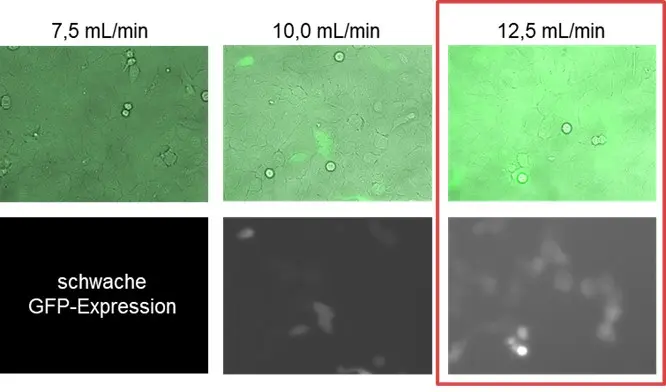
Images on top: Overlay (bright field + GFP); Images on the bottom: GFP fluorescence image
Particle size: A critical parameter
A particularly interesting correlation emerged between process parameters and particle properties: as the flow rate increased, the particles became smaller and, at the same time, more stable.
At a flow rate of 12.5 mL/min, the particles initially measured approximately 94 nm and showed only a slight change in size (~107 nm) even after seven days.
The flow rate therefore has a significant influence on particle size.
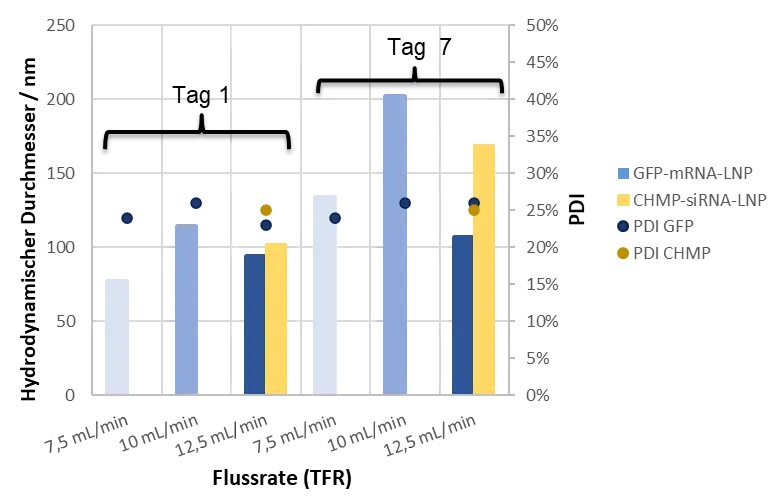
Comparison of particle size trends as flow rates vary (EtOH < 1%), measured hydrodynamic diameters on day 1 and day 7
Experiment 2: siRNA - similar strategy, new insights
In the second step, we formulated our proprietary CHMP-siRNA prodrug.
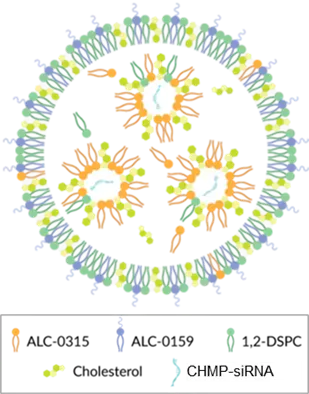
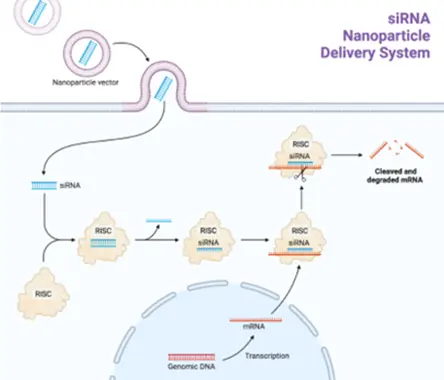
Left: LNP containing lipid components. Right: Schematic representation of the siRNA mechanism of action. Graphic by @XNAPharma
The expectations were clear: effective gene silencing.
The initial results were sobering at first: no significant silencing was detected (48 h)
Second Approach: Small Changes, Big Impact
But instead of leaving it at that, we tailored the experiment specifically:
-
Use of LNPs stored for 1 week (4 °C)
-
Transfection in serum-containing complete medium instead of OptiMEM®
Result: Significant gene silencing by the CHMP siRNA was detected
From this experience we learned that:
Not only the formulation itself, but also storage conditions and the biological environment have a decisive influence on the efficacy of LNPs.
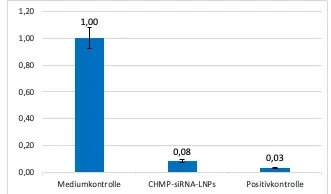
Relative expression measurement of CHMP-siRNA encapsulated in LNP, normalized to a medium control
Take-home messages
The workshop was much more than just an introduction to the equipment. It provided us with specific insights:
- LNPs remain stable (< 200 nm) and functional during several days of storage
- The choice of medium can significantly affect transfection efficiency
-
Successful gene silencing is the result of a combination of particle design, process parameters, and biological setup
And perhaps most importantly:
We can now control the entire development process ourselves and optimize it in a targeted manner.
From screening to scaling:
One of the major advantages of the NanoScaler Pro is its scalability:
-
Small-scale screening
- Scalability to larger batches
- Outlook: in vivo studies
Our next steps are already clearly defined:
- Reproduction and refinement of the formulations
- Extended stability studies
- Adjustment of particle size and composition
- Establishment of TFF for ethanol reduction
- Preparation of preclinical studies
This guest post was written by Johanna Sommermeyer from XNAPharma.
For further information on this topic, please contact: s.stephan@knauer.net