Simulated Moving Bed Chromatography: Efficient Continuous Separation
Do you use single-column batch chromatography to purify your target substance? But are you facing limitations such as high solvent consumption, diluted product streams, and reduced throughput? If so, you may be looking for an alternative purification strategy that overcomes these limitations.
What is Simulated Moving Bed Chromatography (SMB)?
SMB chromatography is a continuous multi-column purification technology, that uses the stationary phase efficiently while reducing solvent consumption. It is especially suitable for separation and purification of binary or pseudo binary mixtures, including enantiomers, sugars, petrochemicals, and fine chemicals.
Conventional Batch Chromatography
In conventional chromatography, a sample mixture is injected into a single column and transported through the stationary phase by a mobile phase. Since each compound interacts differently with the stationary phase, they migrate through the column at different speeds:
- Weakly retained components move faster
- Strongly retained components move more slowly
As a result, the separated compounds leave the column at different times and can be collected individually (Fig.1). However, before another sample can be injected, the previous sample generally must be eluted completely, and the column re-equilibrated.
Although conventional batch chromatography is flexible and relatively straightforward, it has disadvantages at an industrial scale. The stationary phase is not used continuously for separation throughout the process. This may lead to limited productivity, high solvent consumption, diluted products, repeated regeneration steps, and product losses.
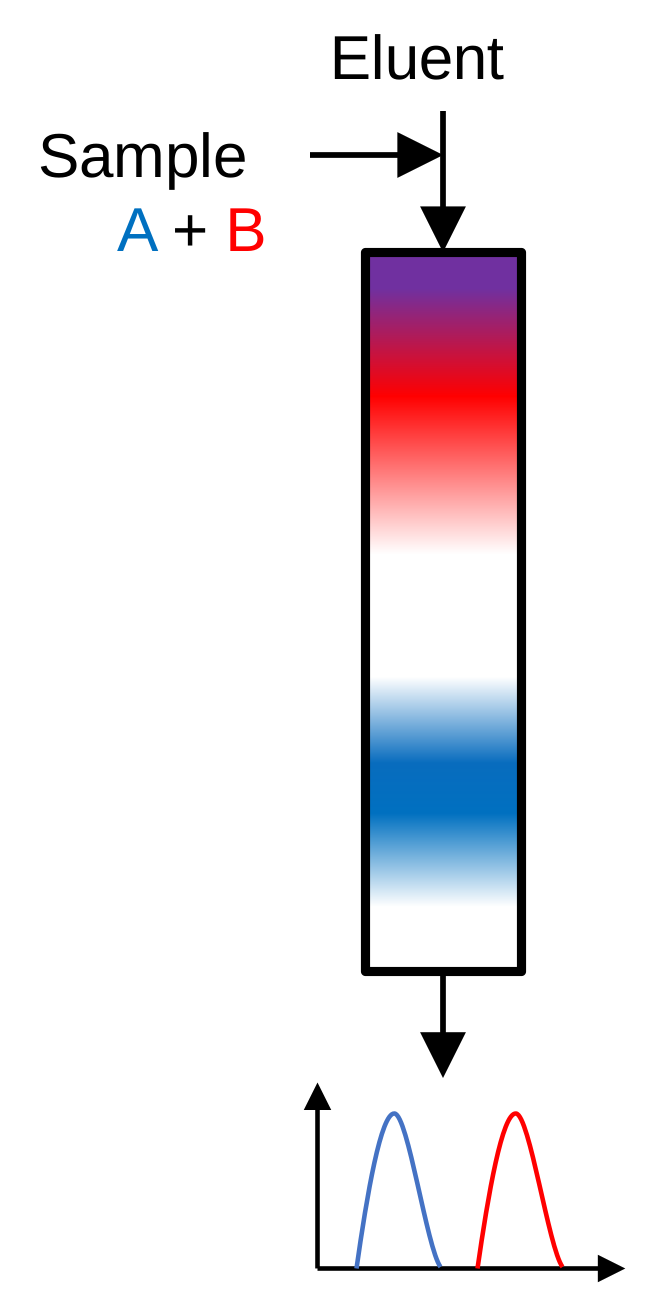
Figure 1: Single column separation; A – fast eluting component, B – retaining component; graphic by KNAUER
From True Moving Bed to SMB
The theoretical basis of SMB is the True Moving Bed (TMB) process. In an ideal TMB system, the liquid mobile phase and the solid stationary phase move continuously in opposite directions. This counter-current movement makes efficient use of the component’s different affinities for the two phases.
To understand the principle of TMB, consider a binary mixture of components A and B. Component A is strongly retained by the stationary phase, while component B is less retained and preferentially moves with the liquid phase. Under optimized conditions, both components migrate in opposite directions and can be continuously collected from two separate outlets (Fig.2). Although this concept is theoretically attractive, physically moving a packed chromatographic adsorbent is difficult.
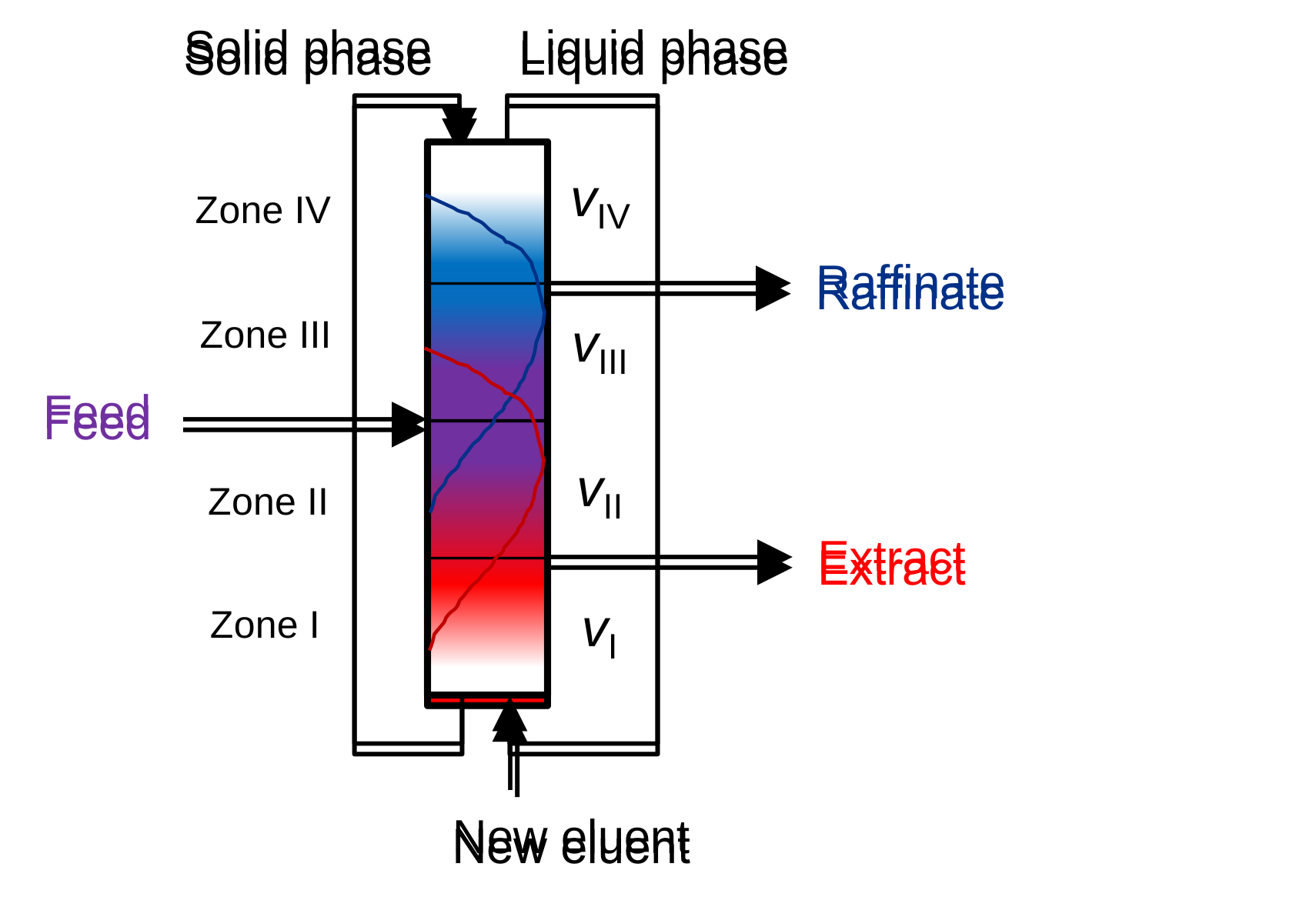
Figure 2: True Moving Bed concept; graphic by KNAUER
Four process ports divide the system into four functional zones (Zone I - IV):
- Eluent (desorbent) inlet
- Extract outlet
- Feed inlet
- Raffinate outlet
The feed und eluent enter continuously and at the same time, two product streams are withdrawn:
- Extract – strongly retained/late eluting component
- Raffinate – less retained/early eluting component
The Four Functional Zones
Each zone performs a specific task and has therefore an individual internal flow rate (VI - VIV):
- Zone I, regenerating the stationary phase
- Zone II, prevents the weakly retained component from contaminating the extract
- Zone III, prevents the strongly retained component from contaminating the raffinate
- Zone IV, regenerating remaining solvent for internal use
How is TMB transferred to SMB?
SMB avoids the problem of moving the stationary phase (adsorbent) by keeping in place. Instead of moving the adsorbent, the positions of the liquid inlet and outlet ports are shifted periodically. Relative to these moving ports, the stationary phase appears to move in the opposite direction to the liquid flow. SMB therefore simulates the counter-current movement of a TMB system without physically transporting the solid phase (Fig.3).
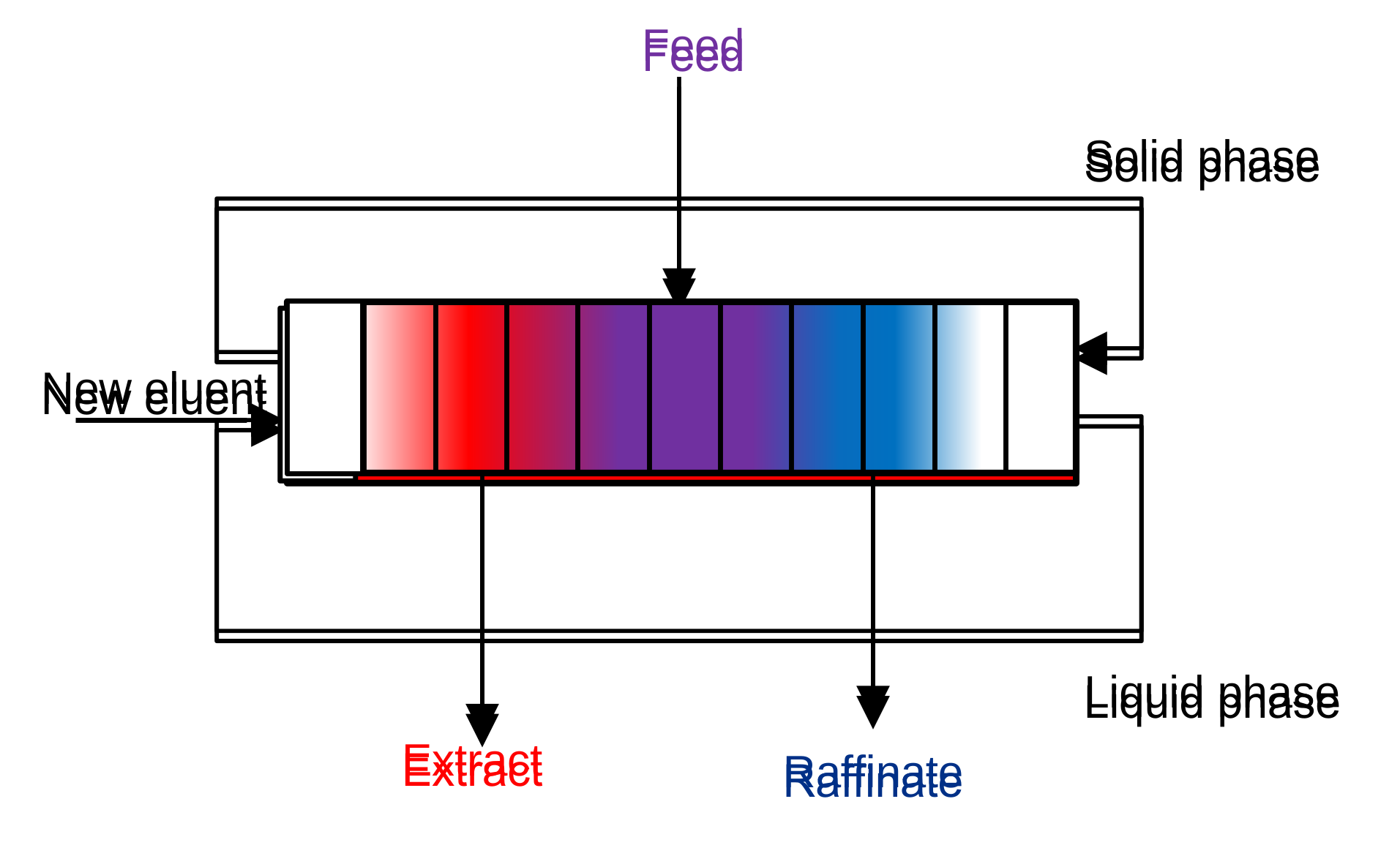
Figure 3: Transfer TMB concept to SMB concept; graphic by KNAUER
A typical SMB system consists of several chromatographic columns connected in a closed loop. Eight columns are in the standard set-up, although the exact number depends on the application.
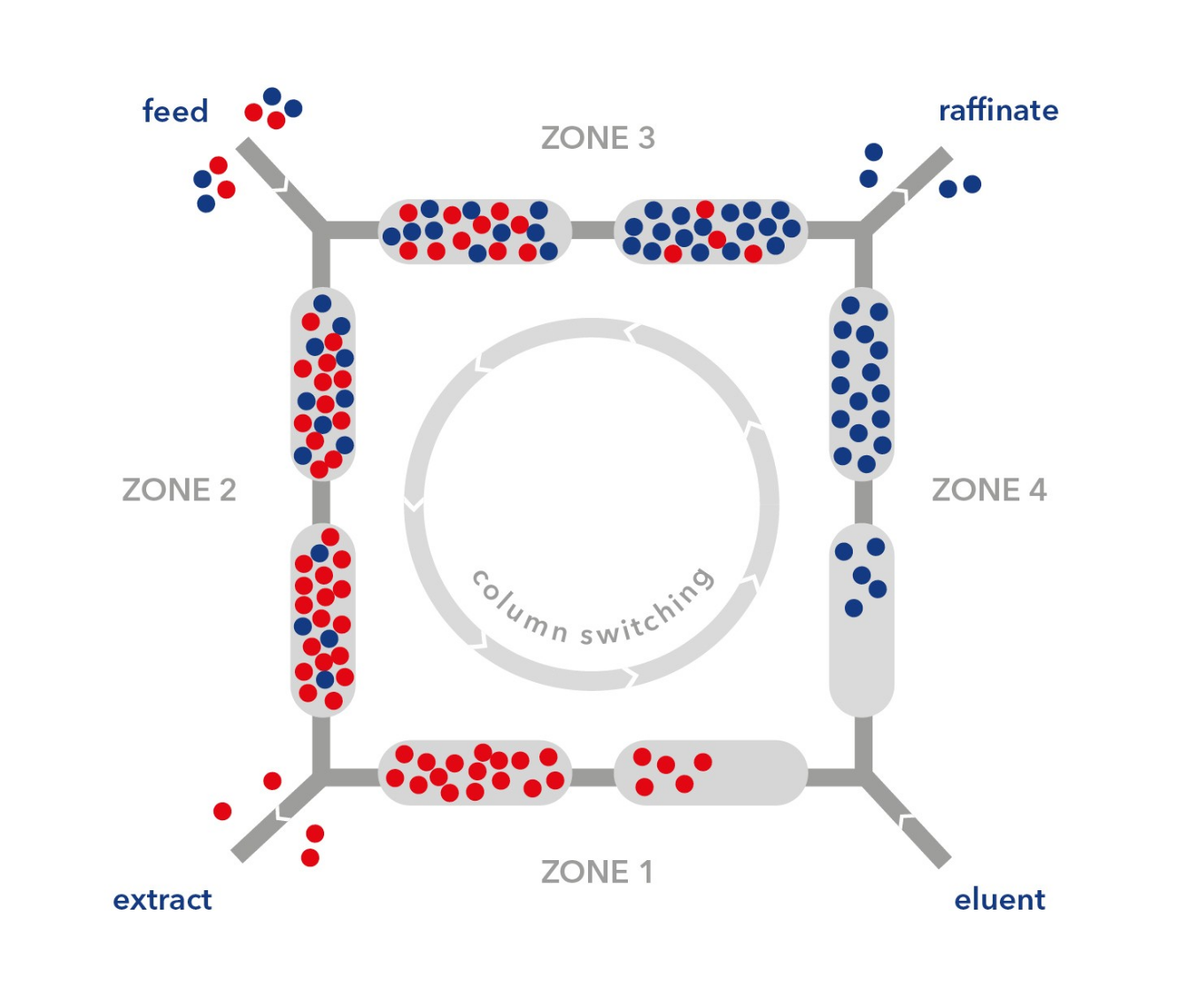
Figure 4: SMB concept; graphic by KNAUER
After a defined switching interval, all ports are shifted by one column into the direction of the liquid flow. The columns remain stationary, but their functions within the system change. Repeating this step creates the apparent movement of the stationary phase in the opposite direction of the liquid phase. The number of columns i.e. eight, defines the number of switches needed to complete one SMB cycle.
After an initial transient period, the system reaches a cyclic steady state. Concentrations still vary during each switching interval, but the overall concentration profile repeats after every complete switching cycle.
The more columns used and the smaller the switching steps, the more closely SMB approximates an ideal TMB process. Systems with only a few columns show more pronounced discrete switching behavior and may require detailed dynamic models for accurate process design.
What are the advantages of SMB?
1. Continuous Operation and Increased Productivity
The primary advantage of SMB is its continuous operation. Feed and eluent are introduced continuously, while the purified product streams (extract and raffinate) are withdrawn simultaneously. This allows the SMB systems to operate for extended periods of time (several days, even weeks) with minimal interruption.
Because multiple columns perform different separation tasks simultaneously, the stationary phase is used more efficiently. This leads to higher productivity, improved process efficiency, and continuous production of purified product streams.
2. Lower Solvent Consumption
Traditional batch chromatography often requires large amounts of mobile phase to separate and recover individual components. This often produces diluted fractions that must be concentrated in the downstream processes.
SMB maintains internal concentration profiles and can use the mobile phase more efficiently. Partial, internal recycling of the solvent is part of the SMB process.
The reduced solvent consumption results in:
- Lower raw-material costs
- Less liquid waste
- Reduced energy demand for solvent evaporation
- Higher concentrated products – less downstream concentration step needed
3. High Recovery and Consistent Product Quality
Once a cyclic steady state is reached, SMB can deliver product streams with consistent composition. Additional advantages may include high recovery, reduced product dilution, efficient stationary-phase use, and convenient integration into continuous manufacturing processes.
What are the differences between batch LC and SMB?
Batch chromatography (single column) | SMB chromatography (multi-column) |
Unlimited number of fractions | Two fractions, no waste |
Recovery typically below 80 % | Recovery up to 100 % |
Either high purity OR high yield | High purity AND high yield |
Isocratic or gradient | Isocratic |
High solvent consumption | Can be as low as 10 % of batch consumption |
Very diluted product | High product concentration |
Which are the application areas for SMB?
SMB processes are established in various application areas to purify products in a wide range from gram to ton range per day (Fig.5).
Established and emerging applications include:
- Sugar purification
- Petrochemical separations
- Chiral separations
- Fine-chemical production
- Pharmaceutical intermediates
- Selected biomolecule separations
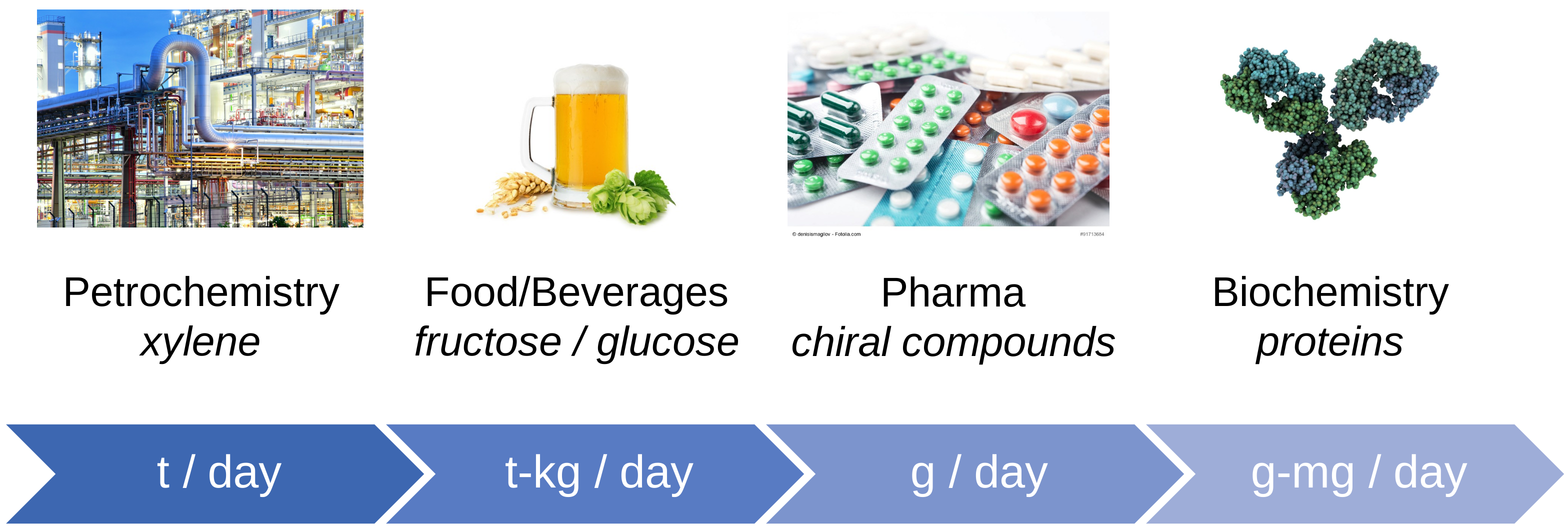
Figure 5: SMB application areas; author's illustration
Limitations of SMB
While SMB is not the best option for every separation, it is definitely worth considering. Its equipment and process design are more complex than those of conventional single-column systems. Multiple pumps, valves, columns, and flow paths must be controlled precisely. A good understanding of adsorption equilibria, mass-transfer resistance, and fluid dynamics are important for the method development.
Classical four-zone SMB is mainly designed for binary or pseudo-binary separations. In cases where more complex mixtures are encountered, modified configurations, additional separation stages, or several coupled SMB units may be required.
SMB is the most economical choice when large quantities of consistent feed are processed over longer operating periods. Batch chromatography may remain preferable for small production operations, frequent product changes, complex multicomponent mixtures, or processes requiring flexible gradient methods.
Conclusion
Simulated Moving Bed (SMB) chromatography transforms the concept of True Moving Bed separation into a practical and efficient industrial process. Instead of physically moving the adsorbent, SMB periodically shifts the feed, eluent, extract, and raffinate ports. This creates an apparent counter-current movement between the stationary and mobile phases.
Compared to conventional batch chromatography, SMB can significantly improve productivity, make better use of the stationary phase, reduce solvent consumption, and deliver more concentrated product streams through continuous operation. These advantages make SMB particularly attractive for challenging large-scale binary separations such as pharmaceutical enantiomer purification.
Although SMB requires careful process design, accurate operating data, and precise control, it demonstrates how an ideal separation principle can be converted into an efficient and robust industrial technology.
For further information on this topic, please contact our author: krauke@knauer.net