The Ultimate Guide to Choosing the Right Pipette for Your Lab
Pipettes are probably one of the most common tools in any lab, whether it's life science or analytical chemistry. But with so many types out there, picking the "right" one for your workflow can be confusing. In this post, we'll explain what a pipette is, the main types (and how they work), their pros and cons, and help you decide "when to use which".
So, what is a pipette?
A pipette is a tool that's used to measure and transfer relatively small volumes of liquid from one container to another.
They range from simple, like glass or plastic "Pasteur" or serological pipettes, to more complex micropipettes (single-channel, multichannel, manual, electronic) with fine volume control. Choosing a pipette depends on things like how accurate and precise it is, how easy it is to use, and if it's suitable for different liquids and workflows.
So let´s start:
The different types of pipettes and how they work
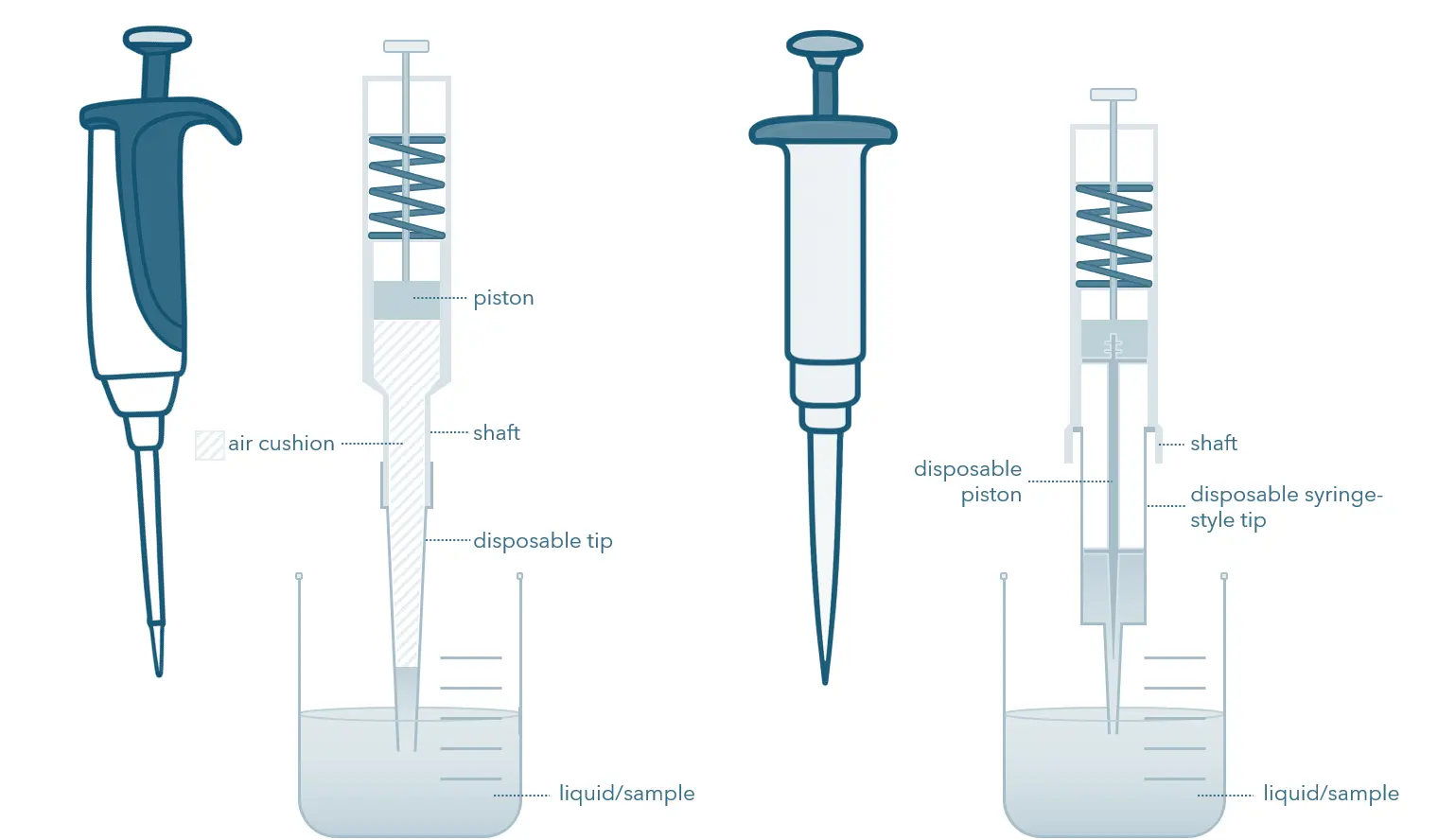
Figure 1: Air displacement (left) and positive displacement (right) pipette systems. (Graphic by KNAUER)
Air Displacement Pipettes
How they work
These are probably the most commonly used micropipettes. They work by having a piston inside the pipette body that moves. Between that piston and the liquid in the tip, there is an air cushion.
During aspiration, the piston moves down, expelling air. In the next step, the piston moves up, forming a partial vacuum that pulls liquid into the tip. During dispensing, the piston exerts pressure on the air, pushing out the liquid.
Advantages
Since this type is the most common, there are a lot of brands and plenty of tip options on the market to choose from. It's usually a pretty cost-effective solution.
Downsides
The air cushion within the pipetting mechanism is affected by various liquid properties, including viscosity, density, temperature, and volatility, as well as environmental conditions such as temperature and pressure. But be aware that the accuracy and precision of the pipette can be affected when it's used close to the lower limits of its specified volume range.
When to Use
This pipette type is perfectly suited for routine lab work with standard, aqueous liquids, like buffers.
Positive Displacement Pipettes
How they work
In this design, the piston is in direct contact with the sample and is often part of the disposable tip. This means there is no air cushion between the piston and the liquid.
This is great when you’re working with liquids whose behavior would mess up with an air cushion, like viscous, volatile, hot or cold liquids, as well as when you’re working with tricky liquids like foaming liquids.
Advantages
The positive displacement mechanism is less affected by the liquid's properties, such as viscosity, volatility, and temperature. When pipetting “difficult” samples, this pipette type provides more accurate delivery.
Downsides
Usually, there is a higher cost for consumables, like special tips.
Labs typically use air displacement pipettes. However, if you regularly need to pipette very viscous or highly volatile liquids, a positive displacement pipette might be more suitable.
When to Use
Whenever you are dealing with liquids that have challenging properties – such as high viscosity, volatility, or foaming – or when you require highest reliability. As an alternative to using filter tips with air displacement pipettes, when contamination control is critical – As the piston does not touch the pipette body, the risk of cross-contamination is significantly reduced, which is ideal for sensitive applications like DNA/RNA analysis and working with hazardous substances.
Want to learn more about how to pipette challenging liquids? Have a look at the 2nd blog post in our “Pipetting Made Easy” Series.
Within each of the mechanisms mentioned above, especially the air displacement mechanism, there are further classifications.
Fixed vs Adjustable Volume Pipettes
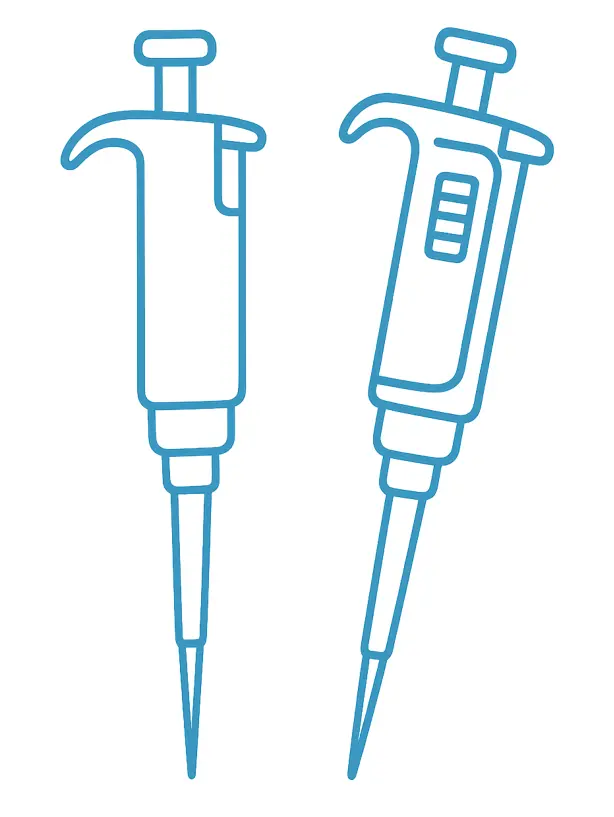
Fixed-volume pipettes are set to dispense a single, unchangeable volume only. These pipettes are thus less flexible, but they’re usually more accurate and precise at that one single volume.
Adjustable-volume pipettes allow you to set a volume within a specified range. These pipettes are more versatile, offering flexibility. However, you might get less accurate and precise results if you use the pipette at the lower end of its volume range.
Manual vs Electronic Pipettes
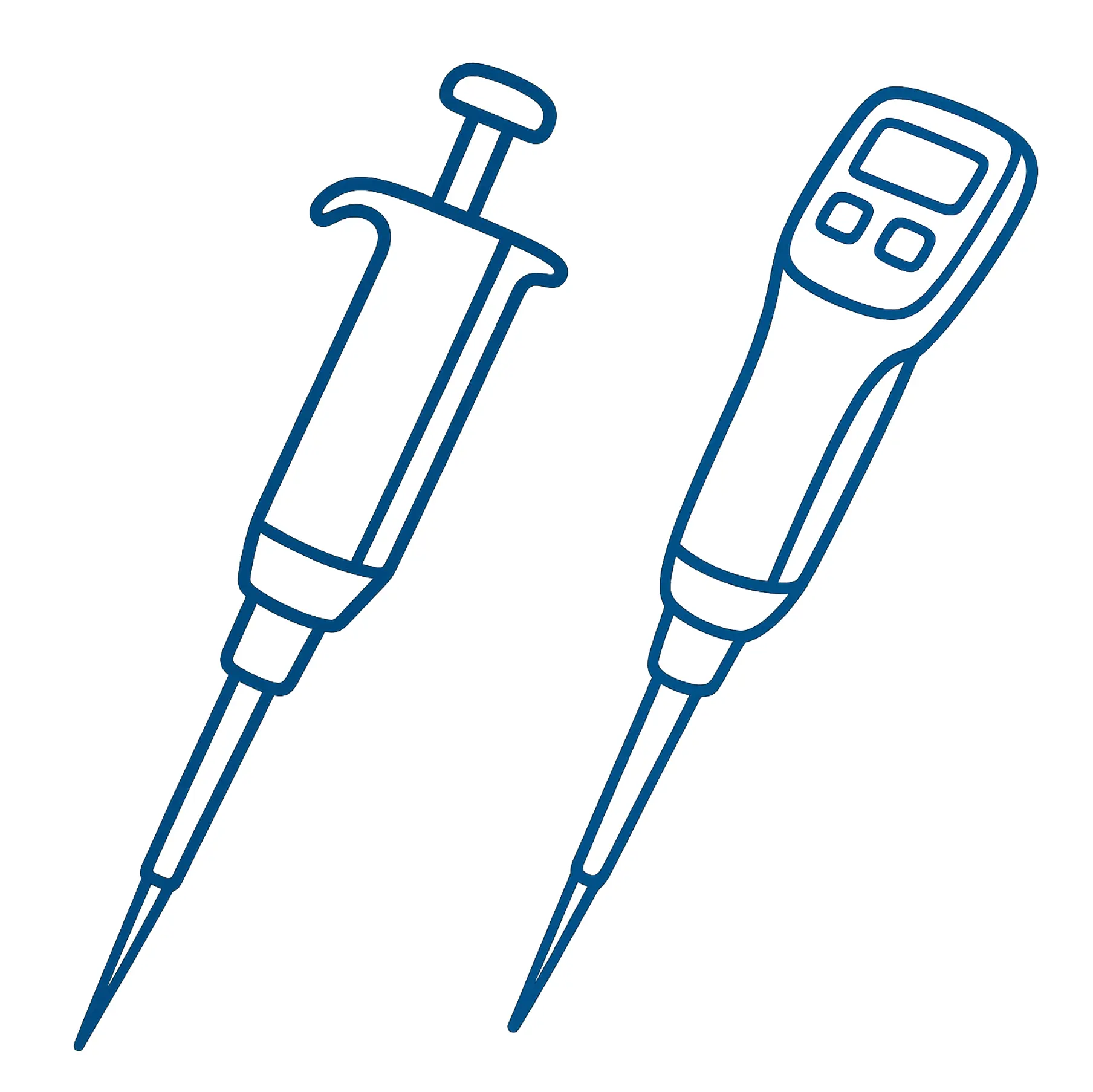
Manual pipettes are traditionally operated by pressing a plunger manually, adjusting the volume mechanically. The pressure of your thumb/wrist is used to control the speed and flow. Manual pipettes are cost-effective and are well-suited for routine and smaller labs with lower throughput.
Electronic pipettes use electric motors to drive the piston and they often have programmable functions (e.g. savable pipetting protocols), offering lower physical strain, improved consistency/reproducibility, and reduced operator-to-operator variability.
Compared to simple manual pipettes, however, they have higher acquisition costs and require more complex maintenance. Electronic pipettes are perfect for high-throughput workflows, multi-step pipetting, and handling lots of samples a day.
Single‐channel vs Multichannel Pipettes

Single‐channel pipettes, as their name already indicates, have one channel to pipette one sample at a time. They are great for transfers of fewer samples, non‐plate formats (e.g. single tubes) or individual wells where you don't have to go all out with a multichannel. Single-channel makes sense when precision per individual sample matters more than speed.
Multichannel pipettes allow simultaneous transfers of multiple samples (e.g., from a reservoir to a full row or column of a microplate) because they have multiple channels (e.g., 8, 12, 16, 24, 96 channels). These pipettes are designed for microplate workflows and high throughput. They make volume transfers way faster and reduce repetitive strain. Using multichannel for transferring many samples means there's less chance of error.
However, multichannel pipettes are more expensive, and they need matching labware formats (e.g., 96-well plate suited to 8-channel pipette). Tip spacing may matter here as well.
Repeating or Stepper Pipettes
Repeating pipettes (also known as stepper pipettes) dispense the same volume over and over again from a single aspiration, often using special syringe-style tips. Thus, these pipettes are great for repetitive dispensing, helping to reduce hand strain and improve speed.
Examples for use cases are filling microplates with identical volumes of reagents, buffers, or media repeatedly, or serial experiments that require uniform dispensing. But the special tips can be costly, and these pipettes don’t work for unique or variable volumes.
Serological and Pasteur Pipettes
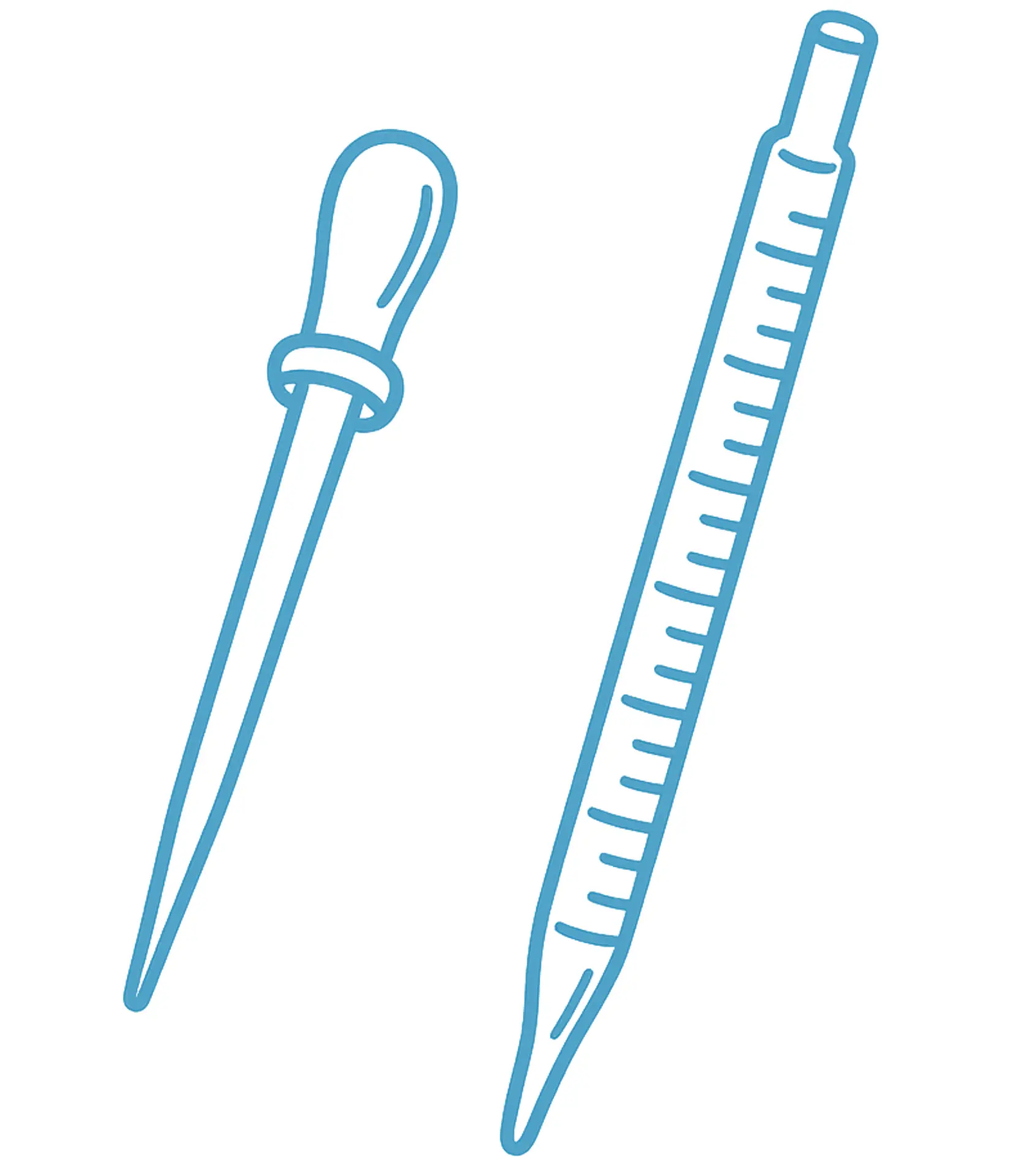
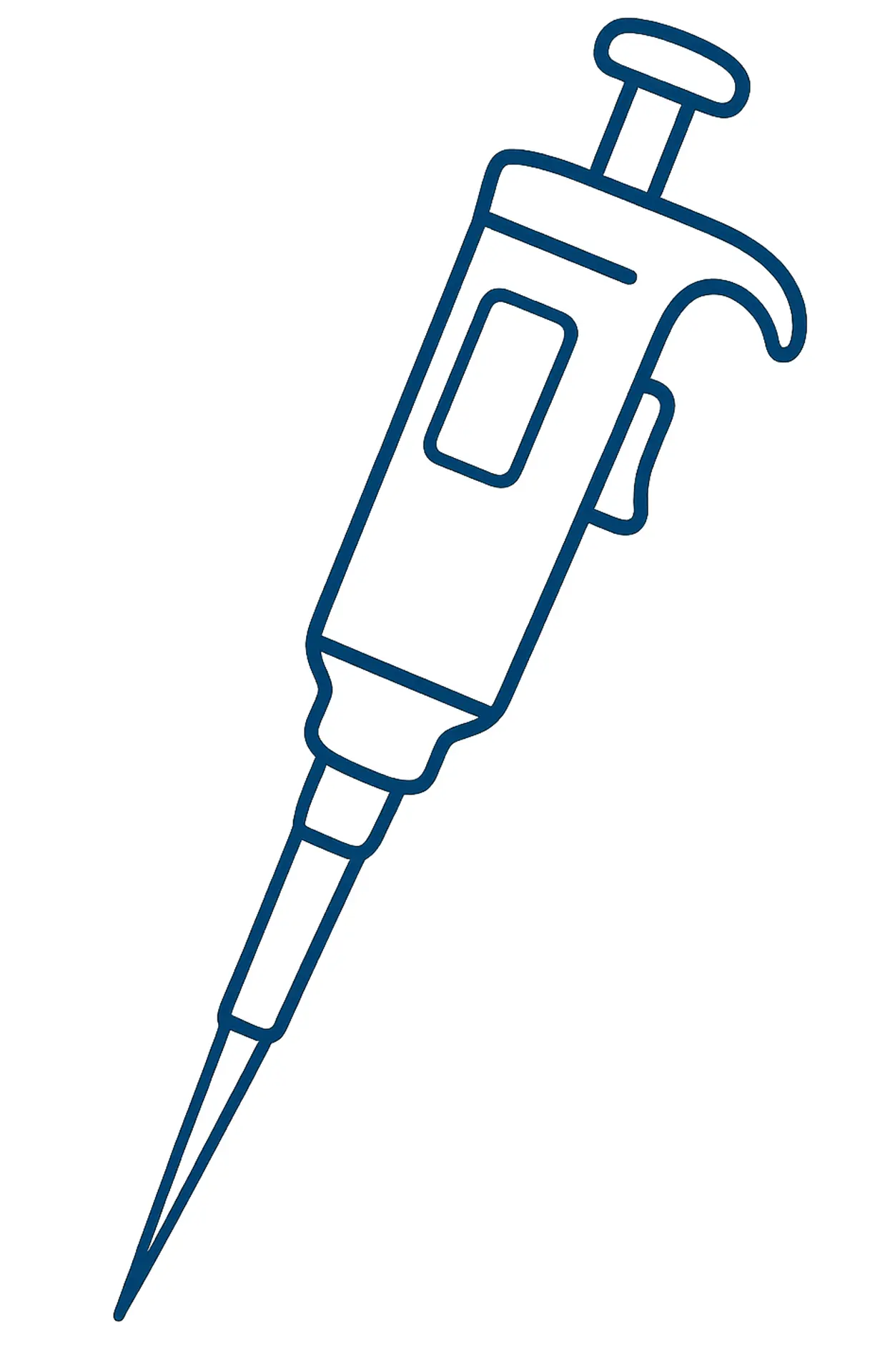
Pasteur pipettes are just simple droppers used for qualitative or approximate liquid transfers of small quantities. Pasteur pipettes are basically tubes that are tapered to a narrow opening point at the lower end and fitted with a plastic or rubber bulb at the upper end. Traditionally made from glass, but also available as plastic variants, pasteur pipettes are inexpensive and perfect for liquid transfers where volume precision isn’t needed.
Examples are simple adding/transferring reagents or solvents, or quickly removing supernatants.
This is also true for so-called transfer pipettes. These are made as one-piece from low-density polyethylene plastic and are unbreakable. You don’t need a bulb anymore and they are a great alternative to pasteur pipettes as you no longer have to deal with the hazards of broken glass. Moreover, they are usually inert to biological fluids and most acids.
Serological pipettes are larger-volume pipettes used for transferring 1 – 100 mL of liquid using pipette controllers, pipette aids, or manual bulbs. They are typically used for mixing/transferring chemical solutions and cell suspensions. They can also be used to create gradients in reagent layering.
These pipettes offer faster bulk liquid handling compared to micropipettes. On the other hand, precision is lower compared to micropipettes, and air bubbles can be easily introduced if not used carefully.
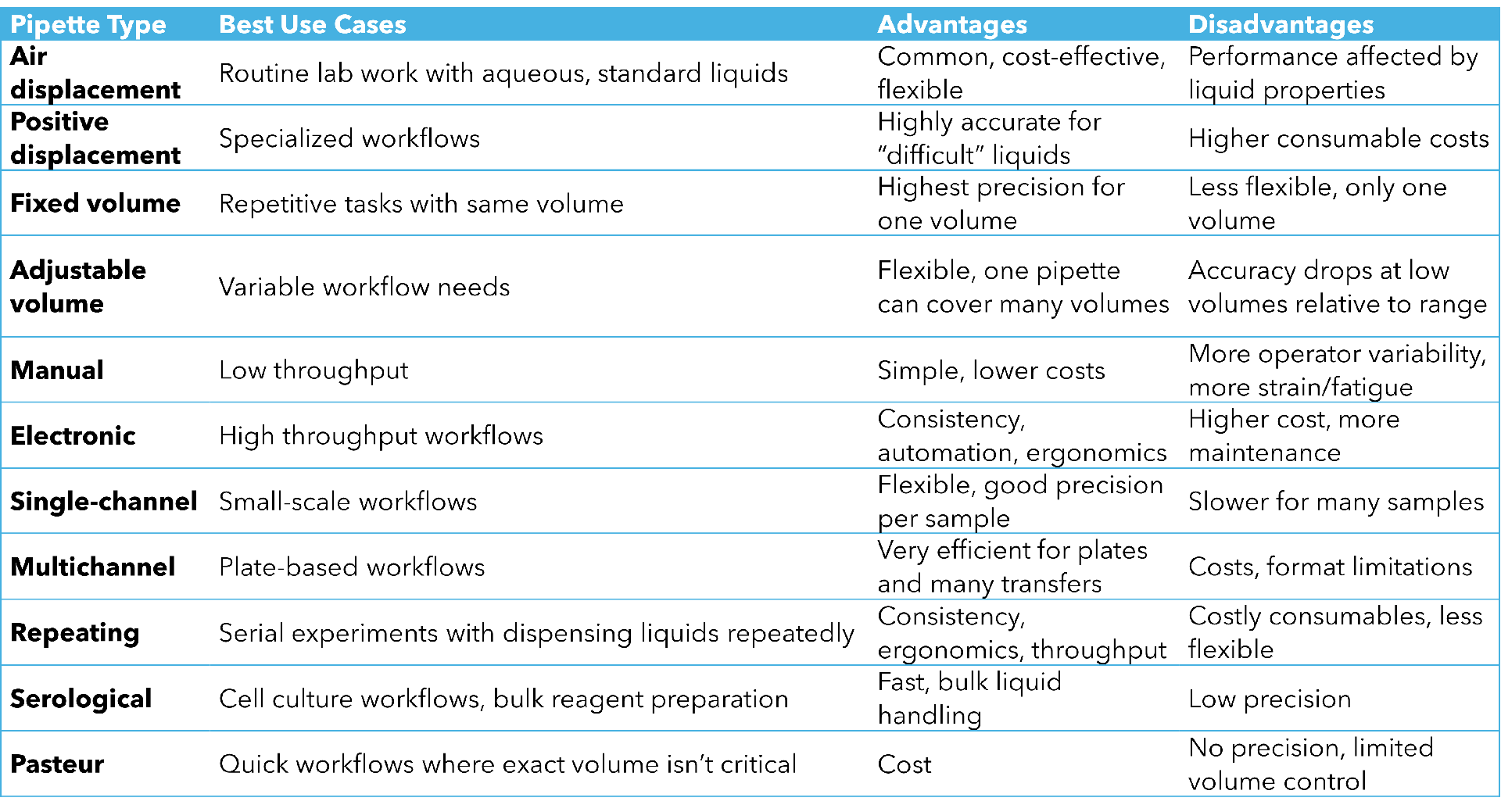
Table 1: Pipette types and their specifications. (Graphic by KNAUER)
How to choose the right pipette
Here are some decision points to help you choose the right pipettes.
Required Volume & Pipette Range

It is recommended to choose the smallest pipette that covers your desired volume, because adjustable pipettes are most accurate at their upper limit of volume. For example, if you always pipette 75 to 100 µL, choose a pipette with a range of 10-100 µL rather than one with a range of 20-200 µL. Another example, dispensing 50 µL with a 5000 µL pipette, will compromise accuracy.
For very small volumes (e.g., < 2 µL), you may need specialised micropipettes or even alternative liquid handling systems.
Liquid Properties
Check out the 2nd blog post in our “Pipetting Made Easy” series for a deep dive into pipetting challenging liquids.
For aqueous and low viscosity liquids with moderate temperature air displacement pipettes are sufficient. If you handle the same “normal” aqueous liquids as most general labs, you might not need the premium cost of positive displacement.
If you are dealing with viscous, foaming, volatile, very hot or cold liquids, then positive displacement systems are the way to go, as these work the best for such liquids. Using air displacement systems, you may need slow aspiration and reverse pipetting.

Throughput & Format

If you are working with microplates (e.g. 96, 384 wells), doing simultaneous transfers, and need high throughput, multichannel pipettes are your go-to choice as these can save time and reduce fatigue.
For small numbers of samples and occasional transfers using single tubes or individual wells, a manual single-channel pipette is usually enough..
If you do many repetitive dilutions or transfers, electronic pipettes can be worth the investment for ergonomics and reproducibility.
User Ergonomics & Reproducibility
If you do many pipetting operations each day, choose a pipette that is lightweight, balanced and has low plunger and tip loading/ejection force. Good ergonomics can reduce the risk of repetitive strain injuries. Electronic pipettes may further reduce physical strain and user-to-user variability as well as improve consistency, especially if your work demands very high accuracy/reproducibility (e.g., diagnostics, high-throughput screening).

Budget & Consumables

Electronic and multichannel pipettes cost more upfront, but savings in time, errors, and ergonomic injuries may offset that in high-throughput settings in terms of efficiency and data quality. For occasional low-volume work, a high-quality manual pipette might suffice.
And don’t forget, cost isn’t just the pipette body, but also the tips (standard vs low-retention vs special), and calibration/maintenance. Also consider tip compatibility of your pipette. It doesn't always have to be the brand name when it comes to pipette consumables. Positive displacement pipettes often have a higher consumable cost due to the special tips used.
Maintenance & Calibration
Consider the ease of maintenance and calibration when choosing a pipette. How is brand/service support, what are the calibration intervals, how durable is the pipette? Regular calibration and servicing help maintain accuracy and longevity.

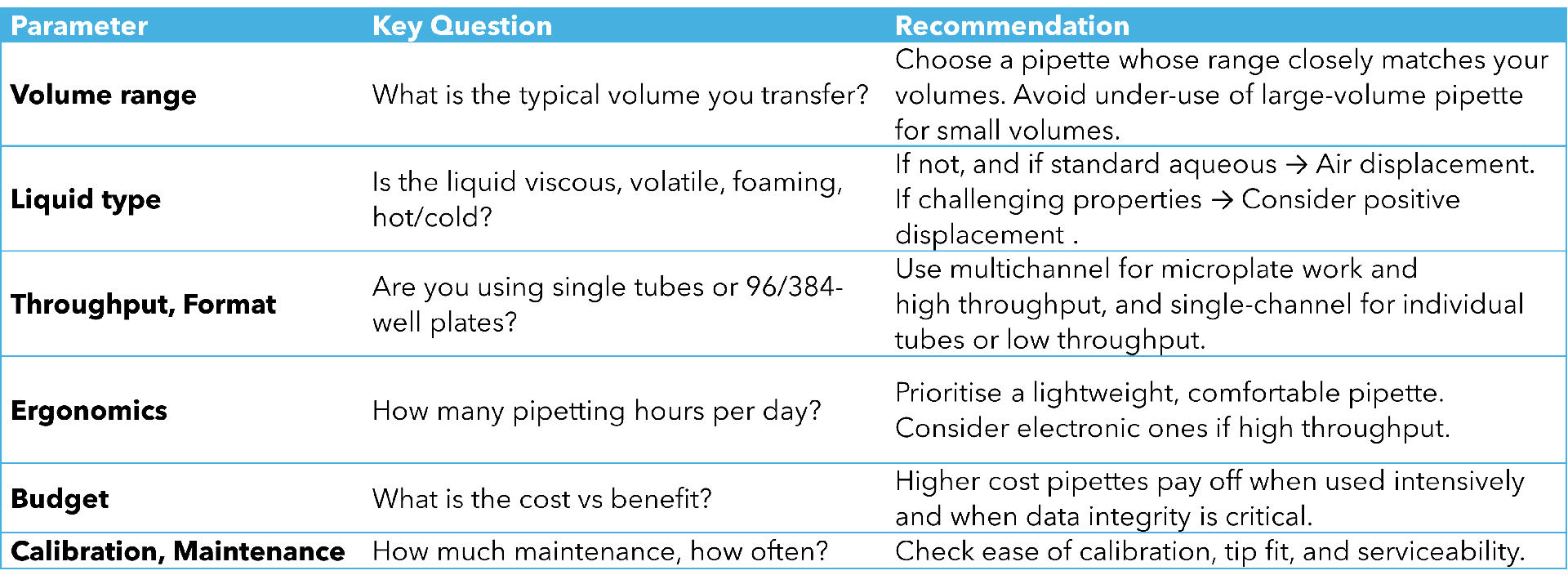
Table 2: Decision factors for choosing the right pipette. (Graphic by KNAUER)
Walk-through scenarios
Here are three example workflows and the pipette(s) we’d recommend.
Scenario A
You work in a molecular biology lab. Most tasks involve adding 5–100 µL of aqueous buffers, standard enzyme mixes, etc. The throughput is moderate (a few dozen samples a day).
Recommendation: A good adjustable volume air displacement single-channel pipette (e.g., one covering 2 – 20 µL and one covering 20 – 100 µL). If you find you do microplate work (96-well) often, a 8-channel 20 – 200 µL pipette could be useful.
Scenario B
You are in a biochemistry lab working with viscous protein solutions, glycerol stocks, hot/cold reagents, and standard solutions. Accuracy is important, and you occasionally handle delicate and precious samples.
Recommendation: For the “difficult” liquids, use a positive displacement pipette. For the more standard liquids, an air displacement pipette is fine. Keep in mind the higher consumable costs for positive displacement systems.
Scenario C
You are in a high-throughput screening facility, filling 384-well microplates, doing many replicates, and you need speed, reproducibility, and minimal user fatigue.
Recommendation: A multichannel electronic pipette or even automated liquid-handling. Choose pipettes with good ergonomics to reduce fatigue. For smaller volumes (< 5 µL) you may even look at acoustic or non-tip technologies though those are outside typical pipette discussion.
Final thoughts
When it comes to choosing the right pipette, it isn’t just about going for the “latest model” or the most expensive one. It’s about matching workflow, liquid type, volume range, throughput, and ergonomics. Understanding the fundamentals of how pipettes work (air vs positive displacement, manual vs electronic, single vs multichannel) helps you make that match rather than relying purely on vendor marketing.
And remember, whatever pipette you choose, good pipetting practice matters: pick the correct tip, pre-wet tips if needed, hold the pipette at the correct angle, ensure tip immersion depth, etc. Have a look our “Best Practice Guide” to find out more about how to pipette properly.
Check out our KNAUER BlueOrchid pipettes, built to support confident results, day after day.
For further information on this topic, please contact our author: huhmann@knauer.net
Resources
INTEGRA Biosciences Corp., Blog Article, Everything you need to know about the different types of pipettes, https://www.integra-biosciences.com/switzerland/en/blog/article/different-types-pipettes (last accessed: 2025-11-27, 8:50)
INTEGRA Biosciences Corp., Product News, Are you using the right type of micropipette?, https://www.integra-biosciences.com/switzerland/en/stories/are-you-using-right-type-micropipette-how (last accessed: 2025-11-27, 9:00)
INTEGRA Biosciences Corp., The complete guide to micropipettes, https://www.integra-biosciences.com/switzerland/en/complete-guide-micropipettes (last accessed: 2025-11-27, 9:30)
Pipette.com, Blog, What Types Of Pipettes Are There?, https://pipette.com/blog/pipette-types (last accessed: 2025-11-27, 9:15)
Eppendorf SE, Liquid Handling Selection Guide, https://www.eppendorf.com/product-media/doc/en/984715/Liquid-Handling_Selection-Guide_Decision-Tree-Liquid-Handling-Instruments-Get-It-Right-Selection-Chart-Liquid-Handling-Instruments-Tips.pdf (last accessed: 2026-22-01, 12:35)
