
Science with Passion

Application No.: VFD0166 Version 1 01/2021
LC-FLD analysis of 4 PAHs in olive oil samples using AZURA® GPC Cleanup System
Federica Massari**, Juliane Boettcher*, Kate Monks*, Pietro Cotugno**, Carlo Zambonin**; applications@knauer.net
*KNAUER Wissenschaftliche Geräte GmbH, Hegauer Weg 38, 14163 Berlin
**Department of Chemistry, University of Bari “Aldo Moro”, Via Orabona, 4, 70126 Bari, Italy
Summary
The aim of this work is to perform the cleanup of olive oil samples before HPLC analysis by means of the AZURA GPC Cleanup System. The GPC-LC-FLD method is very useful to identify and quantify Benzo(a)pyrene and the sum of four Polycyclic Aromatic Hydrocarbons, PAHs, in olive oils according to Commission Regulation (EU) No 835/2011.
Introduction
Polycyclic aromatic hydrocarbons (PAHs) are environmental pollutants, characterized by their hazardous carcinogenic and mutagenic potential [1]. PAHs are ubiquitous compounds, since they can be found not only in all different environmental media (such as air, soil, and water), but also in various foods we encounter in our everyday life [2]. Humans are exposed to PAHs by various pathways. While for smokers the contribution from smoking may be significant, for non-smokers the major route of exposure is the consumption of food, so the dietary intake of PAHs poses the potential health hazards to the public. Food can be contaminated from environmental sources, industrial food processing and from certain home cooking practices. The presence of PAHs in vegetable oils is generally explained by the combination of many factors and processes including the drying process of the oil seeds (with the combustion of gases), contamination during solvent extraction, packaging material, soil burn [1]. Due to their demonstrated carcinogenic and mutagenic activity, they have been largely investigated. A great effort has been devoted to the improvement of the analytical method to determine such compounds in complex samples, such as food.
Results
To validate the analytical method correlation coefficient R², limit of detection and quantification were calculated. The limits of detection (LODs) and of quantification (LOQs) were calculated by the standard deviation of six calibration solutions at a concentration level equal to the lowest calibration level, an approach does not take into account the matrix effect, on the basis of Regulation (EU) No 836/2011. However they are lower than the limit values namely 2.0 μg/kg and 10.0 μg/kg for BaP and PAH4 respectively (Regulation (EU) No 835/2011). The precision of the method was investigated at 0.1 µg/L (BaA, Chry, BaP), 0.2 µg/L (BbF ) by performing replicate measurements (n=3) for 3 days, to estimate the within-day and between-days precision, which was found always lower than 5 %. Recoveries were calculated by a spiked olive oil sample (sample 4, organic origin) at concentration levels of 3.3 µg/L (BbF), 1.6 µg/L (BaA, Chry, BaP). Good recoveries were obtained for 4 PAHs, according to Regulation (EU) No 836/2011 [5]. All these parameters are listed in (Tab A2 additional results). Fig 1 and Fig 2 show respectively LC-FLD chromatograms of a standard solution and of a spiked purified oil sample. Quantification results of LC-FLD analysis of the selected samples are reported in Tab. 1.
Tab. 1 Quantification results from LC-FLD analysis of four olive oil samples
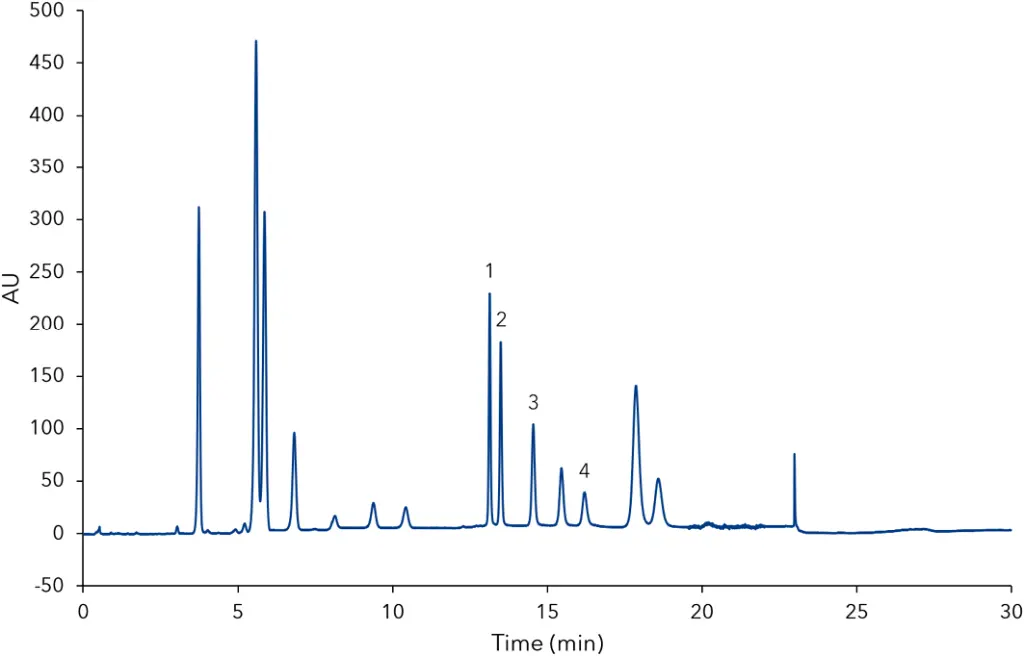
Fig. 1 LC-FLD chromatogram of a standard solution of PAHs at the concentration levels of 5 µg/L (1) BaA, 2) Chry, 4) BaP) and 10 µg/L (3) BbF), respectively
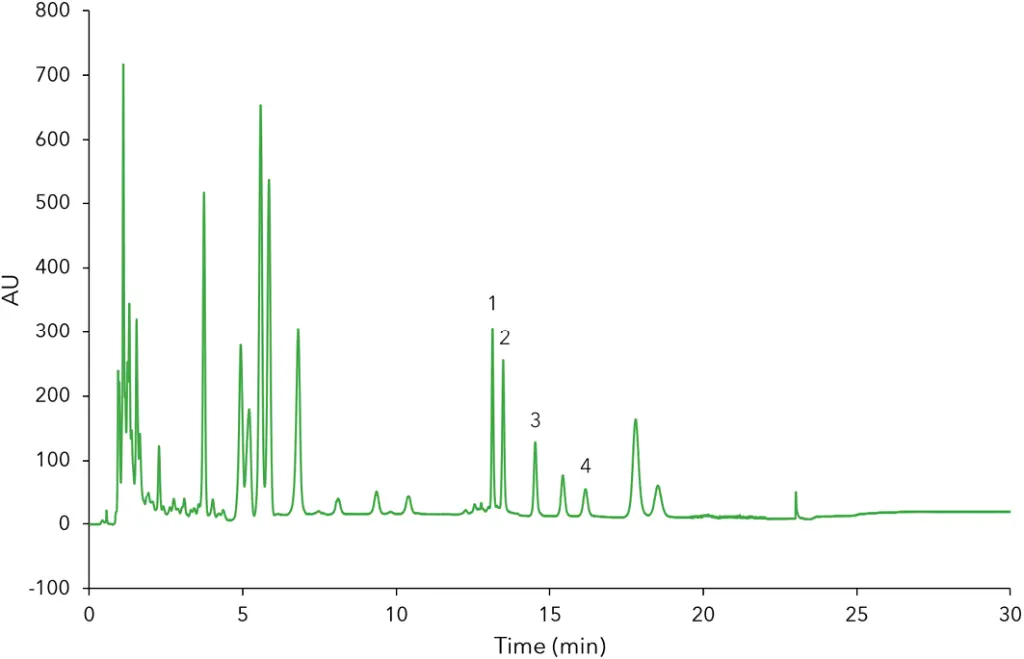
Fig. 2 LC-FLD chromatogram of a spiked and purified oil sample:
1) BaA; 2) Chry; 3) BbF; 4) BaP
Materials and Methods
150 mg of each oil sample were diluted with the mobile phase for GPC, Cyclohexane:DCM, 70:30 (v/v), to a volume of 2 mL. Then the mixture was thoroughly mixed using an ultrasonic bath for few seconds. Filtration with a PTFE syringe filter with a pore size of 0.45 μm was necessary before GPC cleanup. After calibrating the system using GPC calibration mixture, the sample cleanup could be performed. 2 mL of each olive oil sample were loaded into the GPC loop with the following procedure: firstly the injection valve was set to load position and the column bypass valve to load position. Secondly, each loop was rinsed with GPC mobile phase before sample loading and thereafter all tubings were emptied by injecting air with a syringe. Next, the sample was loeaded through the injection port and the two sample loop valves were switched to the next position in order to close the loop. The procedure was repeated for each sample and finally the injection valve was set to inject position to start sequence running. Each purified sample is collected by switching of the fractionation valve automatically. After the cleanup, samples were concentrated under nitrogen stream, reconstituted in mobile phase for the HPLC analysis and fluorescence detection.
Conclusion
AZURA® GPC Cleanup system is a useful tool for a fast sample pre-treatment of olive oil samples before LC analysis with fluorescence detection. The GPC clean-up method represents a very important preliminary step for the determination of 4 PAHs recognized for their demonstrated carcinogenic and mutagenic activity. Benzo(a)pyrene was not present in all analyzed samples. Moreover, all analyzed samples show a PAHs content lower than that required from the Reg. 835/2011 as the sum of the four PAHs results to be always lower than 10.0 µg/kg.
Regulations
The Scientific Panel on Contaminants in the Food Chain (CONTAM Panel) of EFSA adopted an opinion on Polycyclic Aromatic Hydrocarbons in Food suggesting that benzo(a)pyrene is not a suitable marker for the occurrence of polycyclic aromatic hydrocarbons in food and that a system of four specific substances (PAH4) or eight specific substances (PAH8) would be the most suitable indicator of PAHs in food. Then, Commission Regulation (EU) No 835/2011 of 19 August 2011 amending Regulation (EC) No 1881/2006 required that new maximum levels for the sum of four substances, PAH4 (Benzo(a)pyrene, BaP, Benzo(a)anthracene, BaA, Benzo(b)-fluoranthene, BbF and Chrysene, Chry) should be introduced, whilst maintaining a separate maximum level for benzo(a)pyrene [3, 4]. The maximum levels for Benzo(a)pyrene and PAH4 are respectively 2.0 μg/kg and 10.0 μg/kg in oils and fats (excluding cocoa butter and coconut oil) intended for direct human consumption or use as an ingredient in food. Commission Regulation (EU) No 836/2011 of 19 August 2011 amending Regulation (EC) No 333/2007 established the sampling method and analysis for the official control of the levels of lead, cadmium, mercury, inorganic tin, 3-MCPD and benzo(a)pyrene in foodstuffs [5].
[3] Commision Regulation (EC) No 1881/2006 of 19 December 2006 setting maximum levels for certain contaminants in foodstuffs.
[4] Commission Regulation (EU) No 835/2011 of 19 August 2011 amending Regulation (EC) No 1881/2006 as regards maximum levels for polycyclic aromatic hydrocarbons in foodstuffs.
[5] Commission Regulation (EU) No 836/2011 of 19 August 2011 amending Regulation (EC)
No 333/2007 laying down the methods of sampling and analysis for the official control of the levels of lead, cadmium, mercury, inorganic tin, 3-MCPD and benzo(a)pyrene in foodstuffs.
Additional Results
Tab. A1 Different analytical parameters for the analytical method according to Regulation (EU) No 836/2011
Tab. A2 R2, LOD and LOQ, RSD %, % recovery mean
Additional Materials and Methods
Tab. A3 GPC Method parameters
Tab. A4 HPLC Method parameters and detection settings
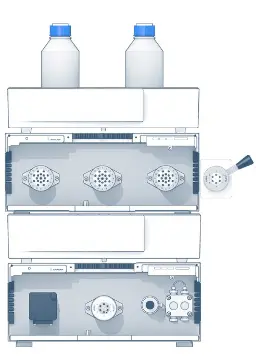
Tab. A5 System configuration & data
Related KNAUER Applications
VFD0152 – GPC clenaup of olive oil samples
References
[1] Vasudha Bansal, Ki-Hyun Kim. Environment International 84 (2015) 26–38
[2] Moon, H.B., Kannan, K., Lee, S.J., Ok, G., 2006. Arch. Environ. Contam. Toxicol. 51, 494–502
Application details
|
Method |
HPLC |
|
Mode |
RP |
|
Substances |
Polycyclic aromatic hydrocarbons |
|
CAS number |
n/a |
|
Version |
Application No.: VFD0166 | Version 1 01/2021 | ©KNAUER Wissenschaftliche Geräte GmbH |