
Science with Passion

Application No.: VEV0082
Version 1 01/2021
GPC cleanup method for soil samples before PAHs analysis
Federica Massari**, Lilit Avagyan*, Matthias Lübbert*, Kate Monks*, Pietro Cotugno**, Carlo Zambonin**, Antonella Aresta**; applications@knauer.net
*KNAUER Wissenschaftliche Geräte GmbH, Hegauer Weg 38, 14163 Berlin
** Department of Chemistry, University of Bari “Aldo Moro”, Via Orabona, 4,
70126 Bari, Italy

Summary
This work is focused on the development of a clean-up method with the AZURA® GPC Cleanup system to purify soil sample extracts before analysis. It was found that GPC cleanup is very useful to remove interferences from extracted soil samples before GC-MS/MS determination of semi-volatile organic compounds, like Polycyclic Aromatic Hydrocarbons. Moreover, the described method enables to perform an automated clean-up procedure and hence to purify many samples efficiently.
Introduction
GPC (Gel Permeation Chromatography) is a size-exclusion clean-up procedure that readily separates high molecular weight interferents from sample extracts using organic solvents and a porous hydrophobic gel (primarily a crosslinked divinylbenzene-styrene copolymer) [1]. It is possible to distinguish between different types of Bio-Beads resin based on the type of cross-linkage. In this application Bio-Beads S-X3 with 200–400 mesh was used according to EPA method 3640 [1]. GPC clean-up can be used extensively in numerous environmental analysis especially for preparing sample extracts prior to semivolatile compounds determination, such as pesticide, and PAHs analysis by GC/MS or HPLC-UV-DAD. Sample cleanup is particularly important for analytical separations such as GC, HPLC, and electrophoresis because high-boiling materials can cause a variety of problems in analytical systems, like analyte adsorption in the injection port or in front of a GC or LC column [2]. GPC cleanup protects GC and HPLC columns, reduces analytical maintenance costs, improves accuracy, and allows lower detection limits.
Results
The calibration of the AZURA® GPC Cleanup System was performed with a calibration mixture in dichloromethane containing the following compounds also reported in EPA method 3640: corn oil, methoxychlor; phthalic acid, bis-2-ethylhexyl ester (ester of phthalic acid), perylene, and sulfur [1]. 1 mL calibration standard was diluted with 2 mL dichloromethane and 7 mL cyclohexane to esemble the mixture similar to the mobile phase for GPC. 2 mL solution were injected and calibration test was carried out for 60 min at a flow rate of 1 mL/min.
In Fig. 1 the chromatogram of diluted calibration mixture solution is reported. According to 3640 EPA method, a reagent blank should be analyzed for the compounds of interest prior to the use of the clean-up method [1]. The level of interferences must be below the estimated quantitation limits of the analytes before the method is performed on samples. Using the information coming from the detector, it could be possible to establish appropriate collect time periods for target analytes. 3640 EPA method suggests to initiate column collection just before elution of bis-(2-ethylhexyl) phthalate, after the elution of the corn oil and to stop eluate collection shortly after the elution of perylene, in order to ensure semi-volatiles collection [1]. In particular, a recovery test was performed using PAH standard solution and it was observed that the proper collection time ranged from 18 to 45 min to ensure a good recovery efficiency for the analytes of interest. GPC cleanup method was successfully applied to different soil samples’ extracts derived from the Environmental Chemistry Laboratory of the Department of Biology, University of Bari (separate branch of Taranto, Italy). After performing clean-up method on the selected samples, they were concentrated under nitrogen stream and ready to perform analytical determination.
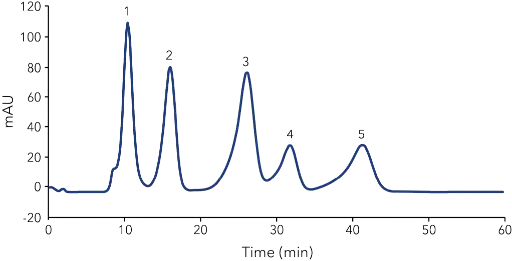
Fig. 1 Chromatogram of a diluted calibration mixture solution 1) Corn oil (5 mg/mL), 2) Phthalic acid, bis-2-ethylhexyl ester (1 g/L), 3) Methoxychlor (0.2 g/L), 4) Perylene (0.02 g/L), 5) Sulfur (0.08 g/L)
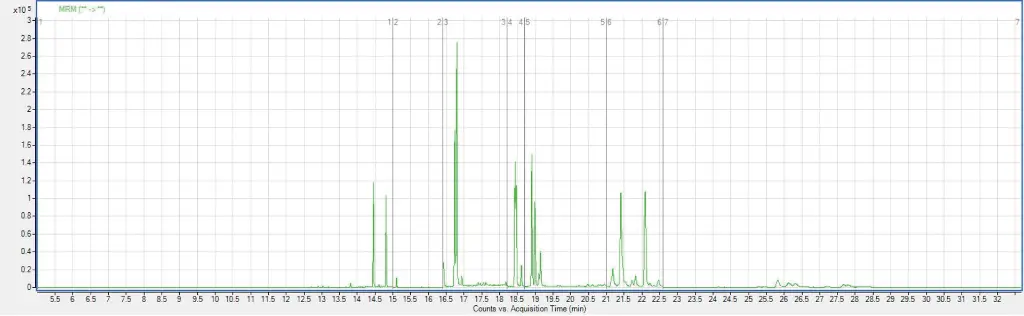
Fig. 2 GC-MS/MS chromatogram of purified soil sample: determination of PAHs
Materials and Method
Extraction of Polycyclic Aromatic Hydrocarbons was carried out using Accelerated Solvent Extraction (ASE), according to the 3545A EPA method [3]. Bio-Beads S-X are supplied dry and must be swollen prior to pack into a chromatographic column. A mixture of cyclohexane and dichloromethane (70:30, v:v) is suitable for clean-up of soil samples. As a general rule, the beads should be swollen in the same solvent chosen as mobile phase, so 10 g of Bio-Beads S-X3 were swelled with 50 mL of cyclohexane and dichloromethane mixture (70:30, v:v) overnight. After the beads were fully swollen, they were packed into a chromatographic column. Before sample cleanup, GPC column was equilibrated with the desired solvent mixture, flushing it almost three times the column volume at 1 mL/min. Cleanup method was performed with AZURA® GPC Cleanup System, which is operated with the Mobile Control Chrom® Software running on a tablet directly mounted on the system. The identification and quantification of PAHs was carried out by GC-MS/MS analysis. Calibration curves were constructed in the concentration range from 10 μg/L to 130 μg/L. To perform GC separation and MRM acquisition, optimization of the best chromatographic and detection conditions was necessary.
Conclusion
This application shows how to perform GPC cleanup with KNAUER AZURA® GPC Cleanup System for the analysis of PAHs in soil samples. This report is very detailed to ensure good performance in GPC cleanup for application in environmental area. We can conclude that AZURA GPC Cleanup System is an helpful tool for sample preparation before instrumental analysis because, unlike other techniques, is very useful for the removal of high boiling materials which would contaminate injection ports and column heads, prolonging column life, stabilizing the instrument, and reducing column reactivity. It could be considered an universal cleanup technique for a broad range of semivolatile organics and pesticides. Moreover, AZURA GPC Cleanup System allows the customer to process many extracted samples, with a reduction in time for the cleanup procedures.
Additional Materials and Methods
Tab. 1 ASE Method parameters
Tab. A2 GPC Method parameters
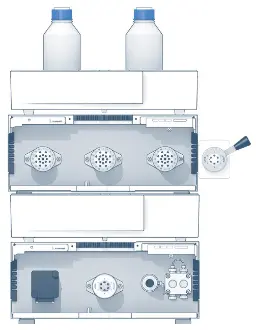
Tab. A3 System configuration (GPC Cleanup system)
Tab. A4 GC-MS/MS method
References
[1] EPA Method 3640A: Gel-Permeation Cleanup
[2] J. D. Winefordner. Chemical analysis: a series of monographs on analytical chemistry and its applications. Vol. 162, p.21 -25
[3] EPA Method 3545A: Pressurized Fluid Extraction (PFE)
Related KNAUER Applications
VFD0153 – GPC Cleanup of olive oil samples
VEV0081 – GPC vs. SPE and subsequent determination of polycyclic aromatic hydrocarbons using GC/MS
VFD0166 – LC-FLD analysis of 4 PAHs in olive oil samples using AZURA® GPC Clean-up System
Application details