
Science with Passion

Application No.: VFD0175 Version 1 03/2019
Verification of the mycotoxin patulin from apple juice with isocratic HPLC
Kristin Folmert, Kate Monks; applications@knauer.net
KNAUER Wissenschaftliche Geräte GmbH, Hegauer Weg 38, 14163 Berlin
Summary
The deleterious and mutagenic mould fungus product patulin can frame during wrong cidermaking process of fruits like apple. The permitted daily exposure for patulin was declared as 0.05 µg/mL in apple juice by the scientific committee for foodstuffs of the European Commission. [1] The specified determination routines have to be performed with HPLC according to official guidelines. Here, a fast protocol for the determination of patulin from apple juice with AZURA® HPLC plus and a Eurospher II column is described.
Introduction
The lactone patulin belongs to the chemical group of polyketides. It is soluble in acidic water and many organic solvents like methanol. Different species of fungi, such as aspergillus, byssochlamys, and penicillium, growing on rotting parts of fruits including apples, cherries, plums, strawberries, blueberries and pears can produce the mycotoxin patulin. [2] Juices can be contaminated with patulin if affected fruits are used for the cidermaking process. As a result of its thermal stability, patulin cannot be destroyed by pasteurization or thermal denaturation. Next to its antibiotic qualities, patulin is implicated as a possible carcinogen but the toxicity of patulin is primarily through its affinity to sulfhydryl groups which results in inhibition of enzymes. [3] Major acute toxicity findings include gastrointestinal problems, neurotoxicity, pulmonary congestion, and edema. [3] To protect customers from patulin in juices like apple juice, the FDA and the European Commission (EU) recommend a maximum daily ingestion concentration of 0.4 µg/kg body weight for humans according to 93/5/EWG and 0.05 µg/mL in apple juice per day. Furthermore, the EU has set a limit of 25 µg/kg in solid apple products and 10 µg/kg in baby food (2003/598/EG). [1]
Results
The very fast and robust method with AZURA HPLC plus for the identification of patulin in juices like apple juice enables the validation of the concentration according to the regulation of the EU and FDA and at lower concentrations. The minimum concentration, which was measured with a 50 µL injection was 0.05 µg/mL apple juice with a signal to noise ratio (S/N) of 216.4. The low noise value of 50 µAu enables a detection of patulin at the limit of quantification (LOQ) with a concentration of 0.003 µg/mL. The short retention times of hydroxymethylfurfural (HMF) and patulin enable a high efficiency for the analysis. A good separation from all matrix peaks (Rs >1.5) comfortably assures the quality of the measurements, as shown in Fig 2 A for the concentration of 0.25 µg/mL patulin and HMF.
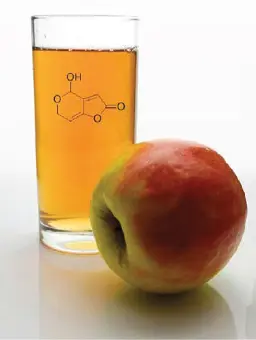
Fig.1 Patulin contamination in apple juice
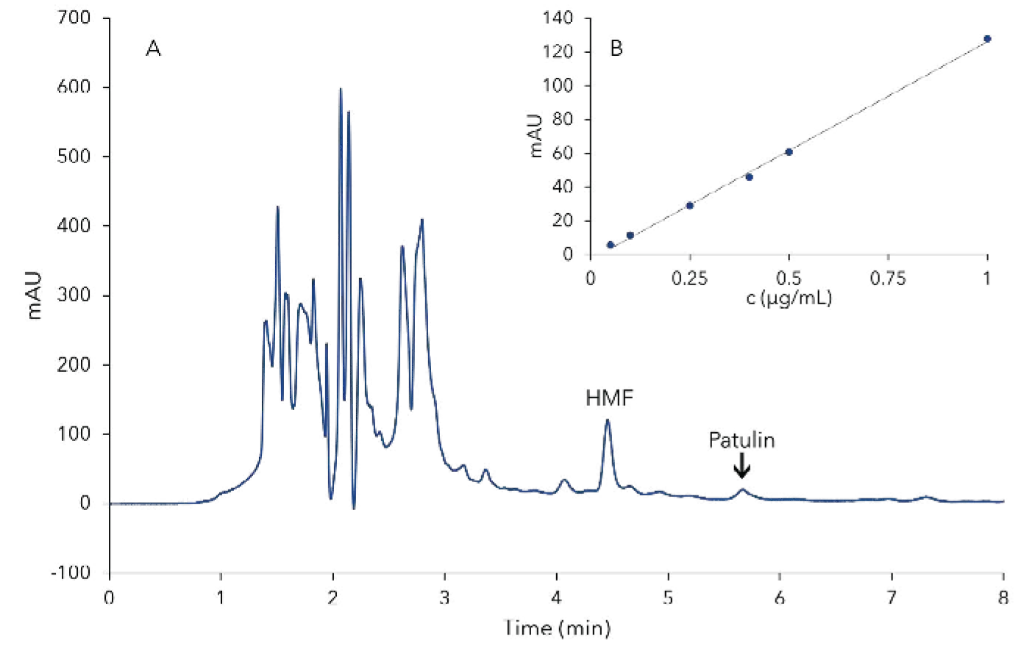
Fig. 2 Chromatogram of 50 µL injections from apple juice concentrate spiked with 0.25 µg/mL patulin and HMF (A) and an concentration curve of patulin with the same injetion volume (B). Concentrations of 1.00 µg/mL, 0.50 µg/mL, 0.40 µg/mL, 0.25 µg/mL, 0.10 µg/mL and 0.05 µg/mL patulin (n=3) for the concentration curve
Materials and Methods
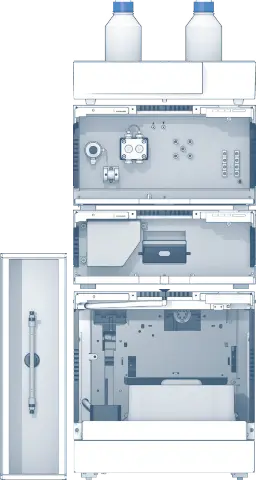
An AZURA HPLC plus system with the possibility to cool the autosampler rack to restore the quality of the food samples and a DAD detector with booster flow cell to monitor impurities at different wavelength was used to develop a simple and fast isocratic method. The eluent was a mixture of 10 % acetonitrile in water. The separation was realized within 7 minutes and with a phenyl endcapped Eurospher II 100-5 Phenyl column at an ambient temperature of 40°C. Therefore, 10 mL of gravy juice were mixed with 600 µL Pectinase enzyme and incubated at 37°C for 3 h before centrifuged at 3500 U/min for 10 min. After removing the centrifugate, the liquid was centrifuged again with the same conditions. The now concentrated apple juice is prepared for HPLC analysis. For the measurements in Fig 2 A, the concentrated juice was mixed with a standard solution of HMF and patulin to gain a concentration of 0.25 µg/mL. To evaluate the concentration in apple juice a concentration curve between 0.05 µg/mL to 1 µg/mL of patulin was measured using a standard of patulin in water (Fig 2 B).
Conclusion
A fast and efficient HPLC method was realized with AZURA HPLC plus and an isocratic method in only 7 minutes retention time. The cooling possibility of the autosampler elongates the life time of sensitive food samples and a column thermostat enables a continuous separation atmosphere above room temperature, which is crucial for the high robustness of the method. With these advantages the identification of patulin from apple juice can be realized down to the very low concentration of 0.003 µg/mL, which is 16 times less than the recommended maximum daily ingestion concentration for humans according to 2003/598/EG of the EU.
Additional Materials and Methods
Tab. A1 Method parameters
Tab. A2 Instrument set up
References
[1] 2003/598/EG, Amtsblatt der Europäischen Union zur Prävention und Reduzierung der Patulinkonzentration in Apfelsaft und Apfelsaftzutaten in anderen Getränken, 2003, L203/54. https://eur-lex.europa.eu/legal-content/DE/TXT/%20PDF/?uri=CELEX:32003H0598&from=EN
[2] G. C. Llewellyn, J. A. McCay, R. D. Brown, D. L. Musgrove, L. F. Butterworth, A. E. Munson, Jr. K. L. White, Immunological evaluation of the mycotoxin patulin in female B6C3F1 mice. Food Chem. Toxicol. 1998, 36, 1107–1111.
[3] O. Puel, P. Galtier, I. P. Oswald, Biosynthesis and Toxicological Effects of Patulin, Toxins, 2010, 2 (4): 613–631.
Related KNAUER Applications
VFD0042J – Analysis of Flavonoids in Fruit Juice
VFD0002J – Determination of Naringine and Hesperidine in Fruit Juices
VFD0152 – Determination of Aflatoxin M1 in Milk
Application details